

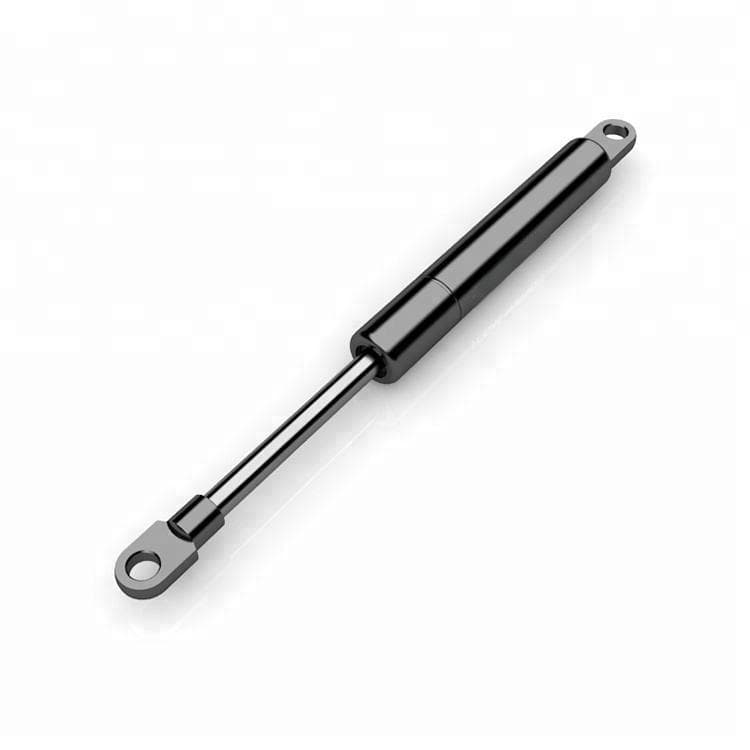
Heavy Duty Gas Springs & Compression Gas Struts for Industrial Machinery
Heavy duty gas springs (compression gas struts) — a technical guide to force, stroke, damping and threaded end fittings for large capacity industrial applications.
Overview
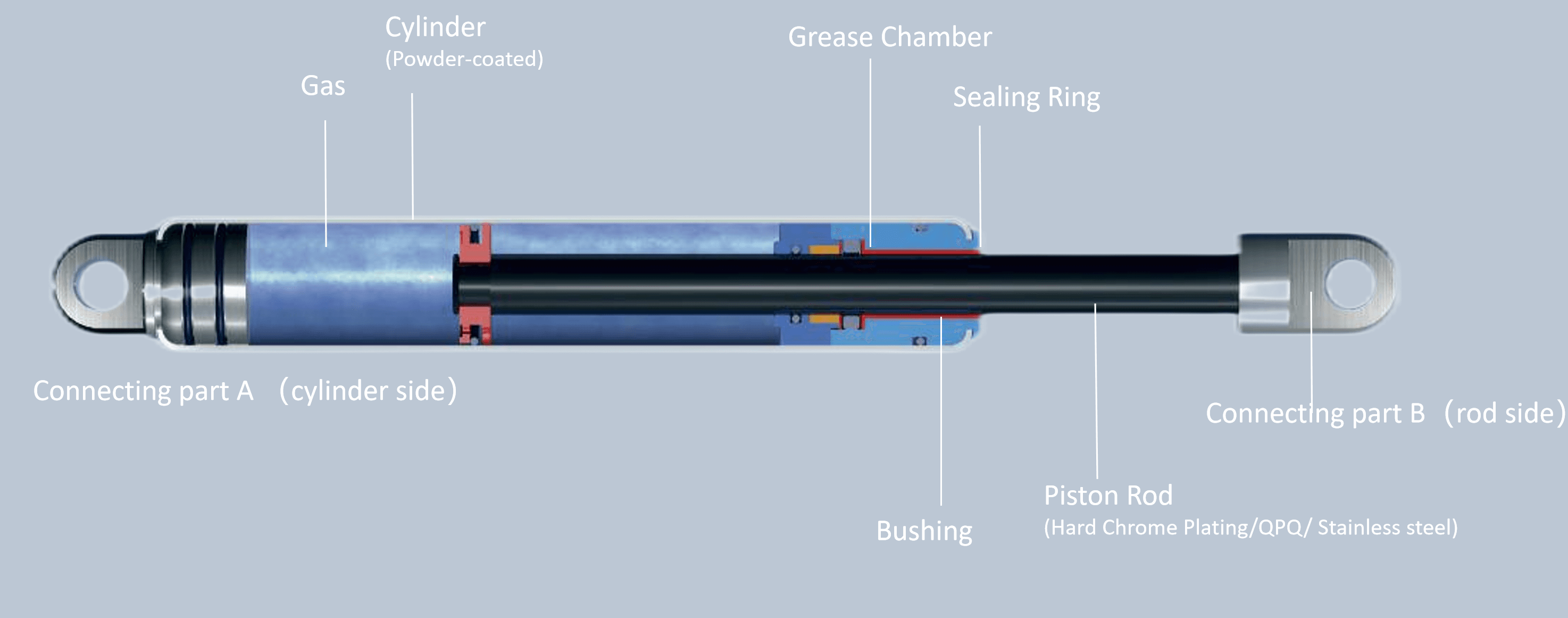
Compression Gas Spring (also known as Gas Strut, Gas Spring, Gas Lift, or Support Rod) is an industrial component that uses high-pressure inert gas (typically nitrogen) to provide controlled support, buffering, and lifting force. It's widely used in applications requiring precise, smooth motion control.
Core Function
Through compressed nitrogen, gas springs provide stable lifting force to assist in opening, supporting, and cushioning heavy components. As a standard push type gas spring supplier, DK offers forces from 50 N to 5,000 N with custom stroke and end fittings.
Typical Applications
- Automotive: Tailgate, engine hood, trunk lid
- Medical Devices: Maintenance covers, bed adjustment mechanisms
- Furniture: Flip-up doors, cabinet doors, height-adjustable tables
- Industrial Machinery: Equipment enclosures, maintenance covers, safety guards
Key Technical Specifications
| Parameter | Range | Description |
|---|---|---|
| Force (N) | 50 - 5,000 | Determines heavy load support capacity |
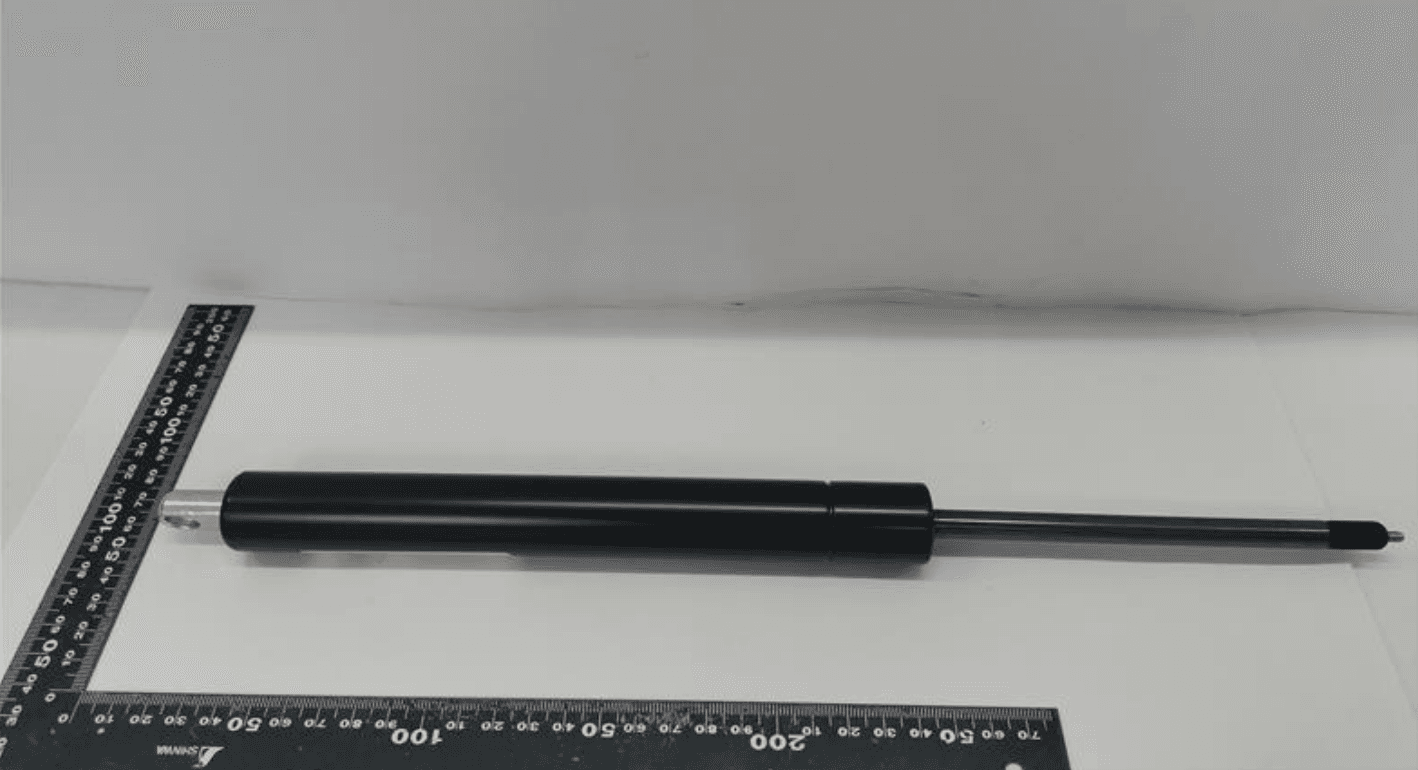
| Stroke (mm) | 19 - 700 | Long stroke piston rod extension distance |
| Full Length | Custom | Overall extended length (center-to-center) |
| Rod Diameter | 6 - 14 mm | Affects bending stiffness and sealing |
| Cylinder Diameter | 15 - 40 mm | Relates to internal gas volume |
Standard Series & Dimensional Parameters
| Series | Rod (mm) | Tube (mm) | Rod : Tube Ratio | Stroke (mm) | Force (N) | Extended Length (mm) | Inquiry |
|---|---|---|---|---|---|---|---|
| 6/15 | 6 | 15 | 1 : 2.50 | 30 - 200 | 50 - 400 | 2 × Stroke + 35 | Inquire → |
| 8/18 | 8 | 18 | 1 : 2.25 | 50 - 300 | 100 - 800 | 2 × Stroke + 45 | Inquire → |
| 10/21 | 10 | 21 | 1 : 2.10 | 50 - 400 | 150 - 1200 | 2 × Stroke + 50 | Inquire → |
| 12/23 | 12 | 23 | 1 : 1.92 | 100 - 600 | 300 - 2000 | 2 × Stroke + 55 | Inquire → |
| 14/28 | 14 | 28 | 1 : 2.00 | 100 - 800 | 500 - 2500 | 2 × Stroke + 55 | Inquire → |
Need a different stroke, force, or size? More models are available — our engineers can help you select or customize the right series. Contact Us →
Selection Guide
- Define Application: Specify the use case and required motion.
- Measure Lengths: Record the extended and compressed center-to-center distances.
- Determine Force: Calculate the necessary force based on load and geometry — or reference the industrial compression gas struts catalog above for standard force and stroke combinations.
- Choose End Fittings: Select fittings compatible with your mounting points.
- Select Options:
- Damping: Damping performance is customizable.
- Protection: Consider special coatings or stainless steel for corrosion resistance.
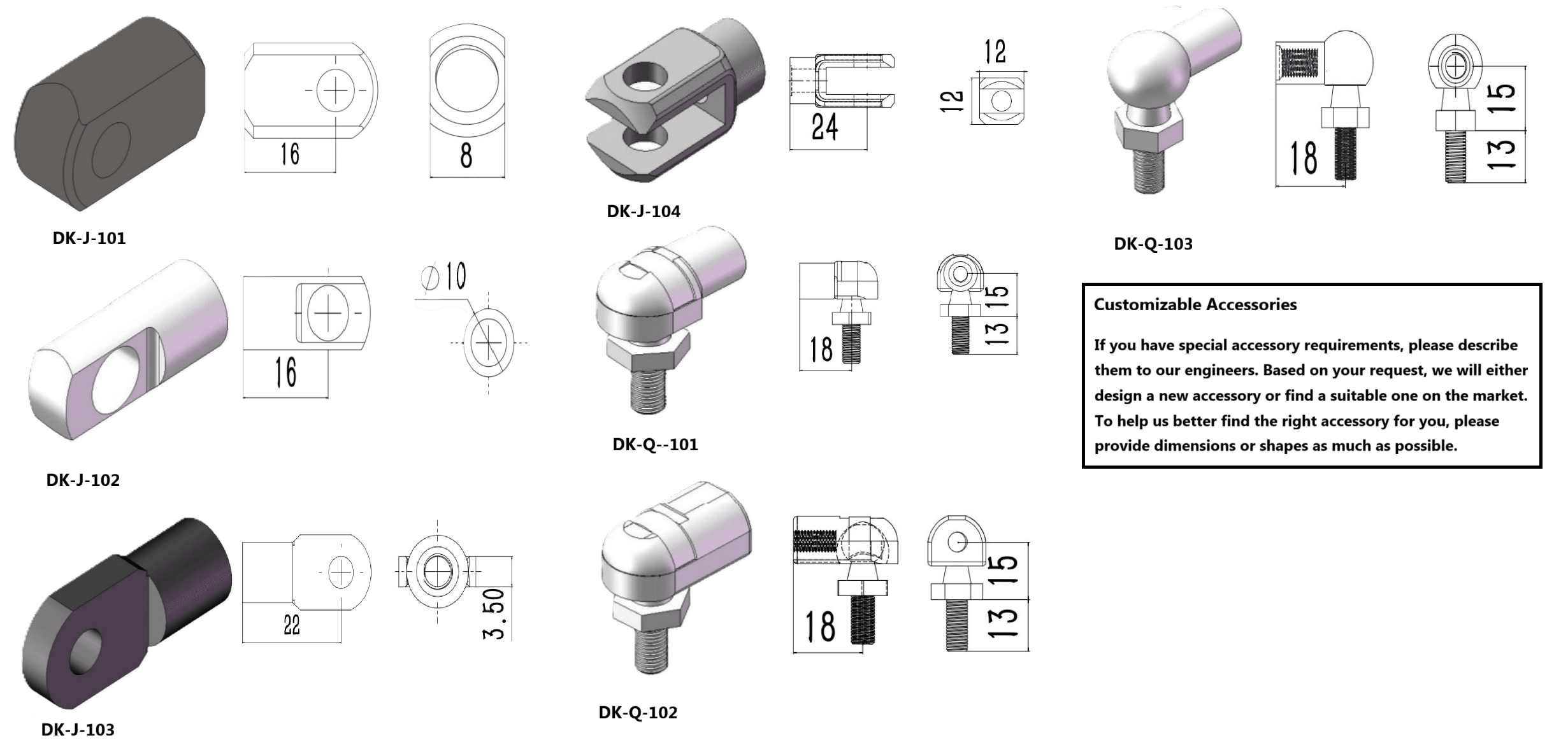
End Fittings & Threaded Connections
- Threaded ball-joint sockets (M6 / M8 / M10)
- Eyelets and clevis
- Brackets and studs
Options
- Damping performance is customizable
End Fittings Category
Quality Certifications
Material & Coating Engineering Standards
To meet diverse industrial environmental requirements, our compression gas springs are available in verified metallurgical configurations:
Standard Duty (Carbon Steel)
High-tensile Q235 steel cylinder with black gloss eco-coating; #45 carbon steel piston rod with hard chrome plating (layer thickness ≥ 20 μm, surface hardness ≥ 800 HV). Passed 96h salt spray testing per ASTM B117 with zero red rust.
Marine & Medical Grade (Stainless Steel)
Both cylinder and rod engineered from Grade 304 or Grade 316 stainless steel. Ideal for medical enclosures and coastal applications requiring extreme acid/alkali corrosion resistance.
View Marine Gas Springs →Independent Test Reports & Compliance
- SGS 100,000-Cycle Fatigue Test: Verified force degradation rate < 5% after 100k strokes (Report Ref: SGS-2025-HG0942).
- RoHS & CE Compliance: 100% heavy-metal-free construction, certified for EU medical and electronic equipment enclosures.
⚠️ Engineering Note — Design Boundary Limits: Maximum force and maximum stroke are strictly governed by the slenderness ratio (λ) of the piston rod. Without maintaining an adequate safety factor (S_F ≥ 2.0), excessive slenderness may lead to elastic instability and catastrophic buckling under compressive loading. For reference: a Φ8 mm rod at 500 mm stroke should not exceed 400 N without an external guide sleeve to reduce the effective buckling length.
If your application requires high force transmission over a long stroke, contact our engineering team for detailed buckling resistance calculations per Euler's theory (F_crit = π²EI / (μL)²) and optimal safety factor selection.
Prototypes & Samples
For verified industrial and OEM clients, we offer a rapid sample service to test physical force and damping directly on your application.
Delivery & Lead Time
Standard configurations are available from stock.
Custom configurations (special forces or stainless steel custom dimensions) are manufactured with a typical turnaround of 2–3 weeks after spec confirmation.
Rigorous Mechanical Fatigue & Lifecycle Testing
The core pain point for B2B buyers is batch failure caused by mechanical fatigue and the resulting high after-sales repair costs. Our product has passed the official SGS full-stroke reciprocating cycle test.
Methodology
An appropriate force is applied to the piston rod to move it from the fully extended position to the fully compressed position. The force is then removed, allowing the rod to return to the fully extended position. This cycle is repeated 50,000 times.
Requirement
After the test, the sample shall not exhibit any damage, jamming, or functional loss.
Final Status
PASSED — No damage, no functional loss
SGS Tested Sample Record (Sample ID: SHA21-033925.001)
Gas spring fatigue test live video
- 1. The statement of conformity is based on a decision rule of non-binary decision with a guard band (guard band length parameter is 0).
- 2. This report is the official original English report (SHHL2103007983FT) issued by SGS, possessing full international traceability and validity.
Salt Spray Test Report (NSS)
Key Test Parameters
Test Method
Neutral Salt Spray (NSS)
Standard
GB/T 10125-2012
Exposure Time
96 Hours
Temperature
35±2 °C
NaCl Concentration
50±5 g/L
Chamber Environment
- Chamber Temperature35±2 °C
- Saturator Temperature47±2 °C
- Salt Fog Collection Rate1.0 - 2.0 ml/(80cm²·h)
- pH Value of Collected Solution6.5 - 7.2
Sample Preparation
- Sample Angle15° - 25° from vertical
- Cleaning Method Before TestWiped with ethanol
- Cleaning Method After TestRinsed in gently running water (<35°C), dried
- Evaluation StandardGB/T 6461-2002
Pass / Excellent
After 96 hours of Neutral Salt Spray exposure, the tested gas spring samples showed no visible red rust on the main cylinder or piston rod. Minor blistering observed on the end fittings (non-critical area). Protection Rating: 9/10.
Engineering Note
Standard configuration delivers 96-144 Hours NSS. Custom multi-layer QPQ and premium coatings are available to support up to 244+ Hours Salt Spray for heavy-duty manufacturing, marine environments, or industrial machinery applications.
Compliance Declaration
Minor surface blistering on standard zinc-plated non-working end-fittings is within acceptable engineering limits for this configuration and does not affect the pressure containment or mechanical integrity of the cylinder.
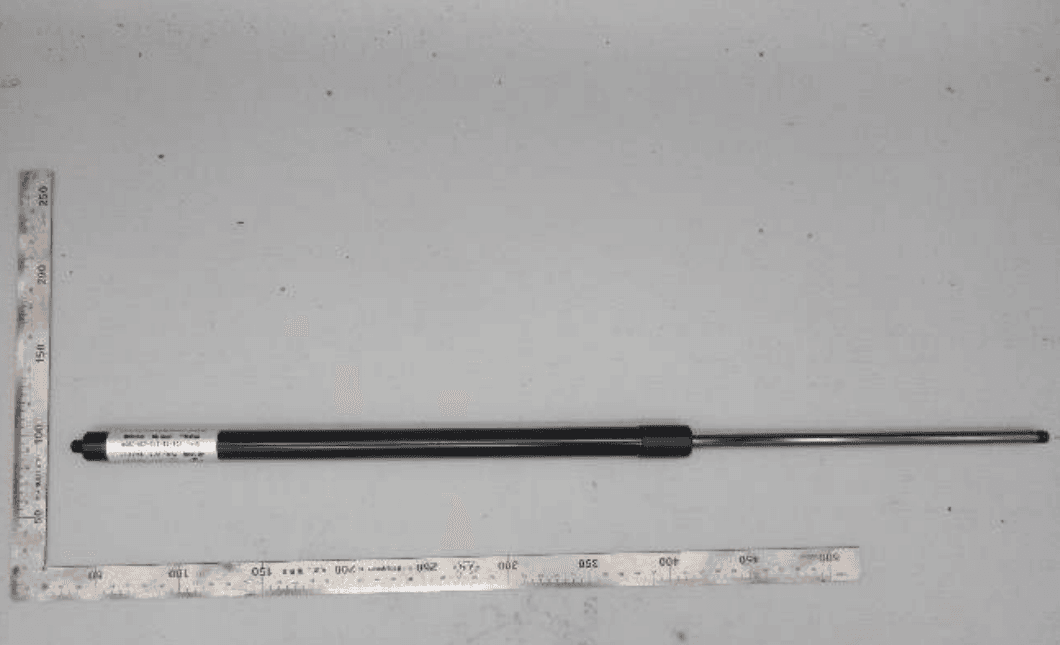
Sample Before Test (0h)
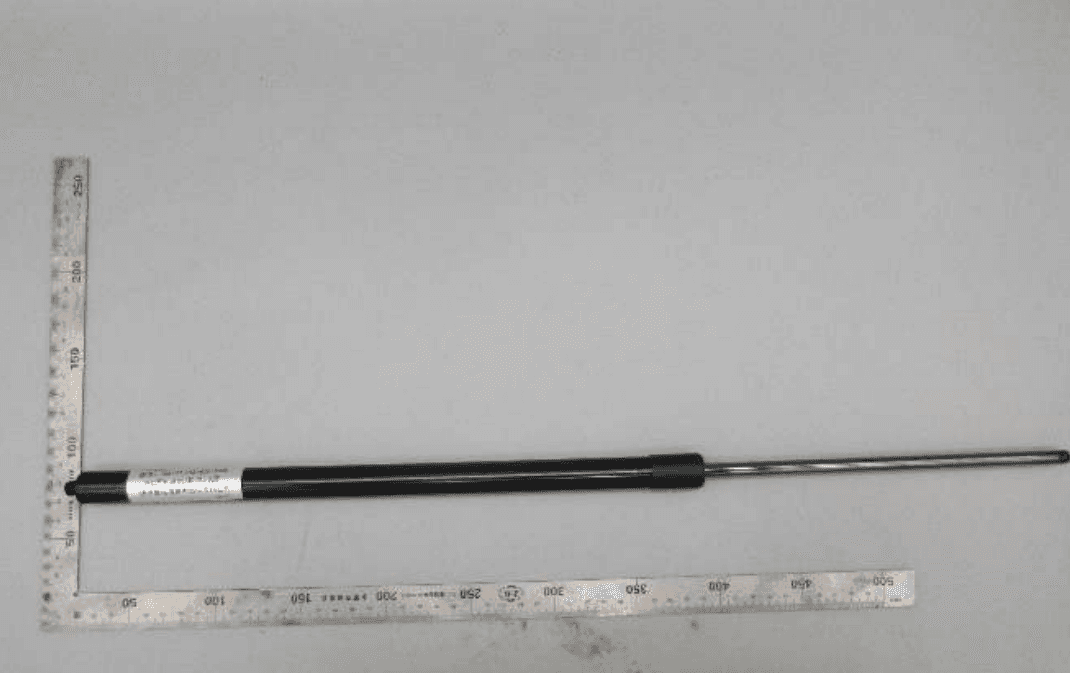
Sample After Test (96h)
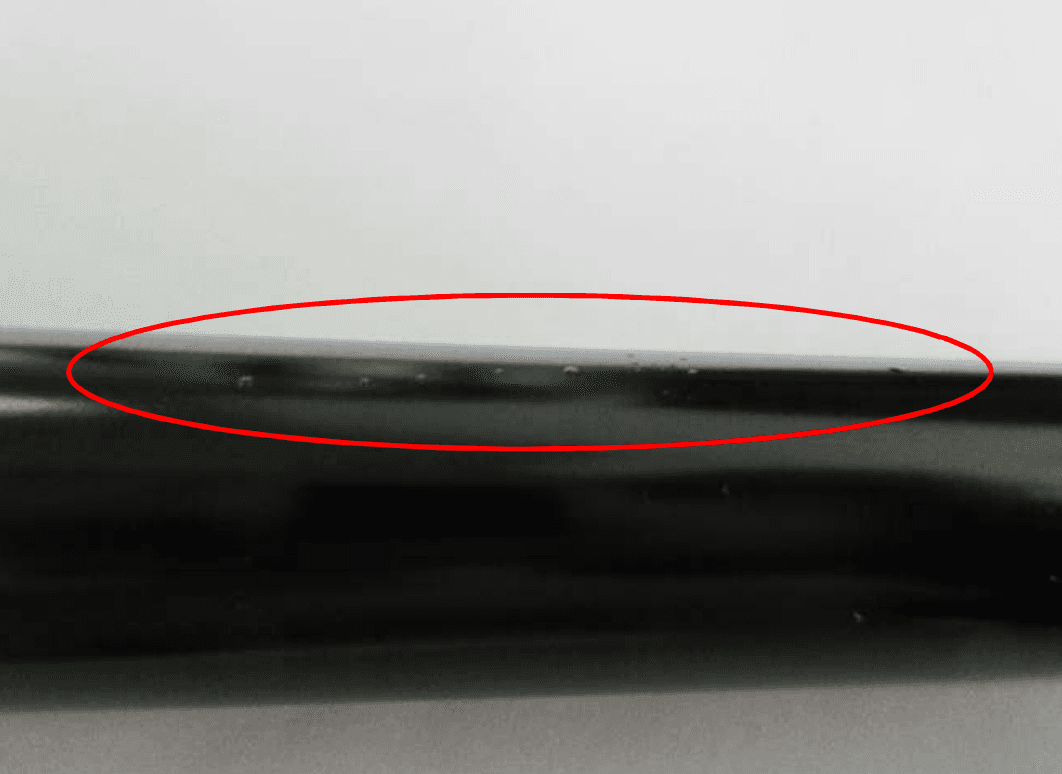
Close-up: Piston Rod Surface (96h)
SGS RoHS Test Report
Substance Analysis Results
| Substance | Limit | MDL | Result | Status |
|---|---|---|---|---|
| Cadmium (Cd) | 100 mg/kg | 2 mg/kg | ND | Passed |
| Lead (Pb) | 1000 mg/kg | 2 mg/kg | 17 mg/kg | Passed |
| Mercury (Hg) | 1000 mg/kg | 2 mg/kg | ND | Passed |
| Hexavalent Chromium (Cr(VI)) | 1000 mg/kg | 8 mg/kg | ND | Passed |
| Sum of PBBs | 1000 mg/kg | 5 mg/kg | ND | Passed |
| Sum of PBDEs | 1000 mg/kg | 5 mg/kg | ND | Passed |
* ND = Not Detected (lower than MDL). MDL = Method Detection Limit.
Tested Sample
Official Test Sample ID: SHA21-033925.001
Reference Standards
- •IEC 62321-5:2013
- •IEC 62321-7-2:2017
- •IEC 62321-4:2013+AMD1:2017
- •IEC 62321-6:2015
Analytical Instruments
- •ICP-OES (Inductively Coupled Plasma Optical Emission Spectrometry)
- •AAS (Atomic Absorption Spectrometry)
- •UV-Vis (Ultraviolet-Visible Spectroscopy)
- •GC-MS (Gas Chromatography-Mass Spectrometry)
Testing & Curves
Standard Test Conditions
Test Speed
400 mm/min
Temperature
20°C
Gas Spring Force Curve Visualization
Default Configuration (Standard 165mm stroke)
Gas Spring Force Curve
Custom Examples
Heavy Duty (800N, 200mm)
Light Duty (200N, 100mm)
Exceeding the QC/T 207-2021 Industry Standard
While China's automotive industry standard QC/T 207-2021 requires gas springs to maintain functionality for 50,000 cycles, DK's industrial-grade gas struts are manufactured with proprietary double-lip oil seals, doubling the lifespan to 100,000 cycles under standard conditions.
DIN / ISO Standards Alignment
Our four-point force definition (F₁ to F₄) test procedures and endurance validation fully comply with European directives and industry-standard DIN specifications for gas springs (in reference to DIN EN ISO 13214).
Four-Point Force Definition
Force at 10mm before full extension
Nominal lifting force (main selection criterion)
Force at 10mm before full compression
Extension start force
Force at 10mm after full extension
Compression start force
Force at 10mm before full compression
Final force before full compression
Low Hysteresis Performance
The tight gap between the compression and extension curves demonstrates our superior seal quality and minimal friction loss (hysteresis < 10%) achieved by our proprietary double-lip oil seals.
Heavy Duty Vibration Damping Gas Struts for Machine Tool Applications
In CNC machining and metal-cutting operations, machine vibration reduces precision and accelerates wear. Our large capacity industrial gas springs integrate hydraulic damping to absorb cutting-induced vibration, protecting machine guards, enclosure covers and precision fixtures from chatter.
- Absorbs cutting-induced vibration and chatter
- Protects machine guards and enclosure covers
- Large capacity industrial gas springs up to 5,000N

Ryan Chen
Senior Project Manager & Industrial Hardware Specialist
“Dedicated to helping global distributors eliminate after-sales risks through precision-calibrated hardware solutions.”