

Independent Test Reports
Independent third-party verification of DK gas spring quality: ISO 9227 salt spray corrosion testing, RoHS substance compliance, and 50,000-cycle fatigue lifecycle results — full original reports, not summaries.
Rigorous Mechanical Fatigue & Lifecycle Testing
The core pain point for B2B buyers is batch failure caused by mechanical fatigue and the resulting high after-sales repair costs. Our product has passed the official SGS full-stroke reciprocating cycle test.
Methodology
An appropriate force is applied to the piston rod to move it from the fully extended position to the fully compressed position. The force is then removed, allowing the rod to return to the fully extended position. This cycle is repeated 50,000 times.
Requirement
After the test, the sample shall not exhibit any damage, jamming, or functional loss.
Final Status
PASSED — No damage, no functional loss
SGS Tested Sample Record (Sample ID: SHA21-033925.001)
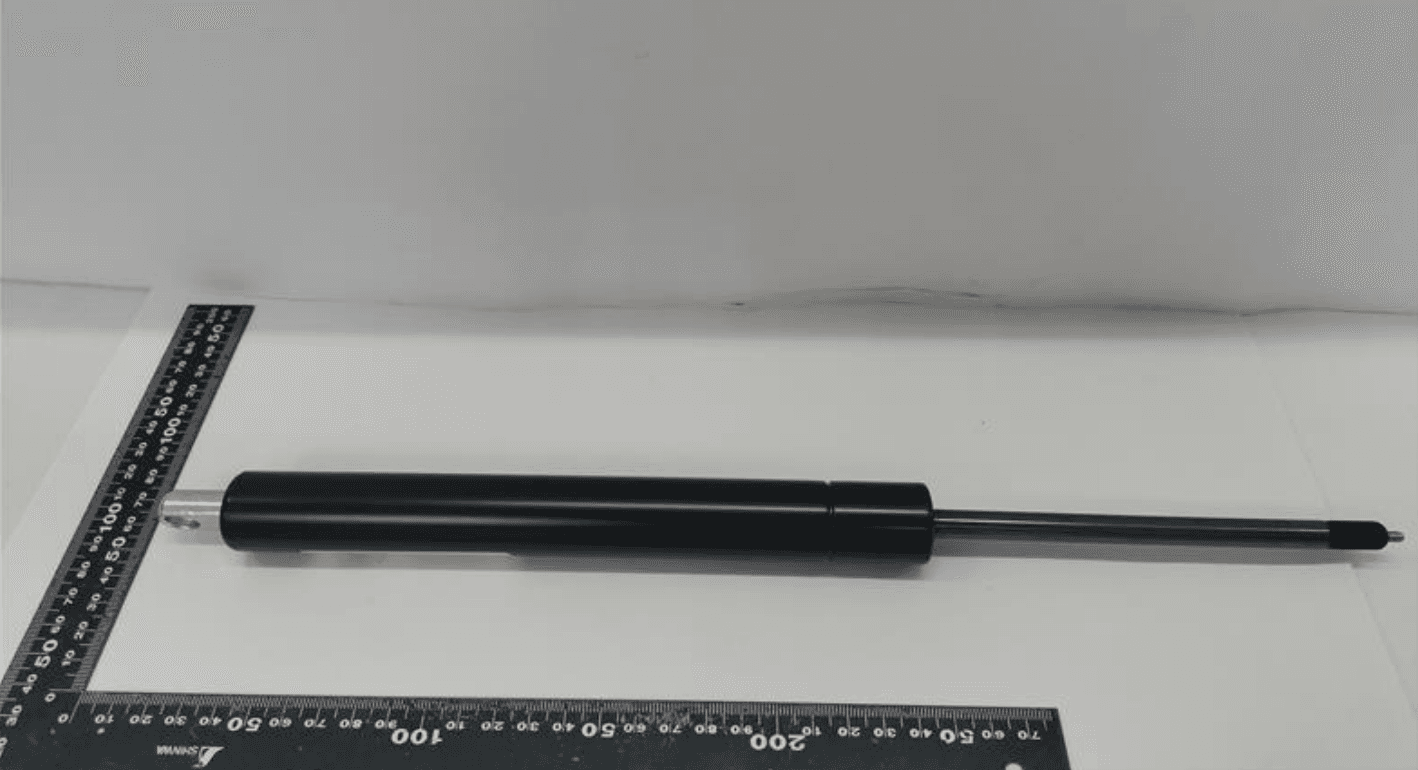
Gas spring fatigue test live video
- 1. The statement of conformity is based on a decision rule of non-binary decision with a guard band (guard band length parameter is 0).
- 2. This report is the official original English report (SHHL2103007983FT) issued by SGS, possessing full international traceability and validity.
SGS RoHS Test Report
Substance Analysis Results
| Substance | Limit | MDL | Result | Status |
|---|---|---|---|---|
| Cadmium (Cd) | 100 mg/kg | 2 mg/kg | ND | Passed |
| Lead (Pb) | 1000 mg/kg | 2 mg/kg | 17 mg/kg | Passed |
| Mercury (Hg) | 1000 mg/kg | 2 mg/kg | ND | Passed |
| Hexavalent Chromium (Cr(VI)) | 1000 mg/kg | 8 mg/kg | ND | Passed |
| Sum of PBBs | 1000 mg/kg | 5 mg/kg | ND | Passed |
| Sum of PBDEs | 1000 mg/kg | 5 mg/kg | ND | Passed |
* ND = Not Detected (lower than MDL). MDL = Method Detection Limit.
Tested Sample
Official Test Sample ID: SHA21-033925.001
Reference Standards
- •IEC 62321-5:2013
- •IEC 62321-7-2:2017
- •IEC 62321-4:2013+AMD1:2017
- •IEC 62321-6:2015
Analytical Instruments
- •ICP-OES (Inductively Coupled Plasma Optical Emission Spectrometry)
- •AAS (Atomic Absorption Spectrometry)
- •UV-Vis (Ultraviolet-Visible Spectroscopy)
- •GC-MS (Gas Chromatography-Mass Spectrometry)
Salt Spray Test Report (NSS)
Key Test Parameters
Test Method
Neutral Salt Spray (NSS)
Standard
GB/T 10125-2012
Exposure Time
96 Hours
Temperature
35±2 °C
NaCl Concentration
50±5 g/L
Chamber Environment
- Chamber Temperature35±2 °C
- Saturator Temperature47±2 °C
- Salt Fog Collection Rate1.0 - 2.0 ml/(80cm²·h)
- pH Value of Collected Solution6.5 - 7.2
Sample Preparation
- Sample Angle15° - 25° from vertical
- Cleaning Method Before TestWiped with ethanol
- Cleaning Method After TestRinsed in gently running water (<35°C), dried
- Evaluation StandardGB/T 6461-2002
Pass / Excellent
After 96 hours of Neutral Salt Spray exposure, the tested gas spring samples showed no visible red rust on the main cylinder or piston rod. Minor blistering observed on the end fittings (non-critical area). Protection Rating: 9/10.
Engineering Note
Standard configuration delivers 96-144 Hours NSS. Custom multi-layer QPQ and premium coatings are available to support up to 244+ Hours Salt Spray for heavy-duty manufacturing, marine environments, or industrial machinery applications.
Compliance Declaration
Minor surface blistering on standard zinc-plated non-working end-fittings is within acceptable engineering limits for this configuration and does not affect the pressure containment or mechanical integrity of the cylinder.
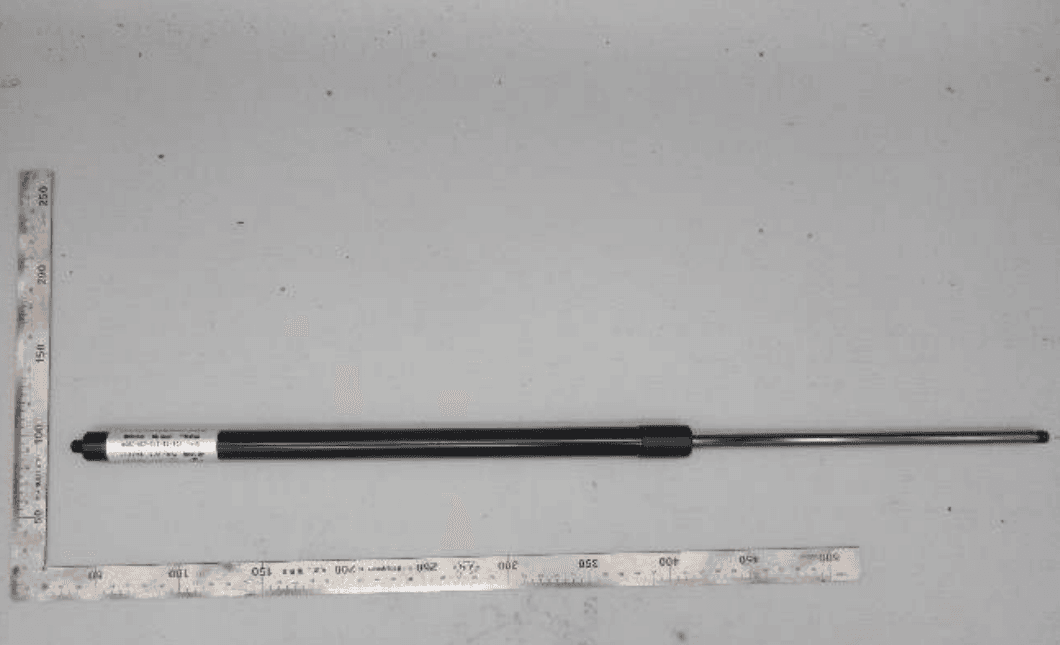
Sample Before Test (0h)
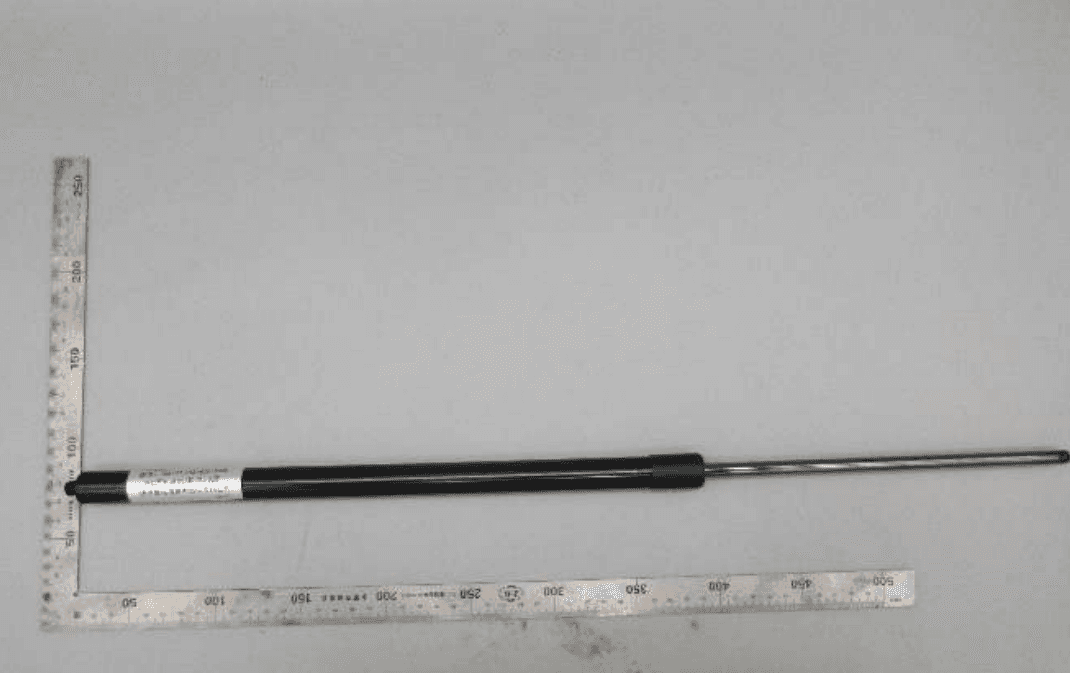
Sample After Test (96h)
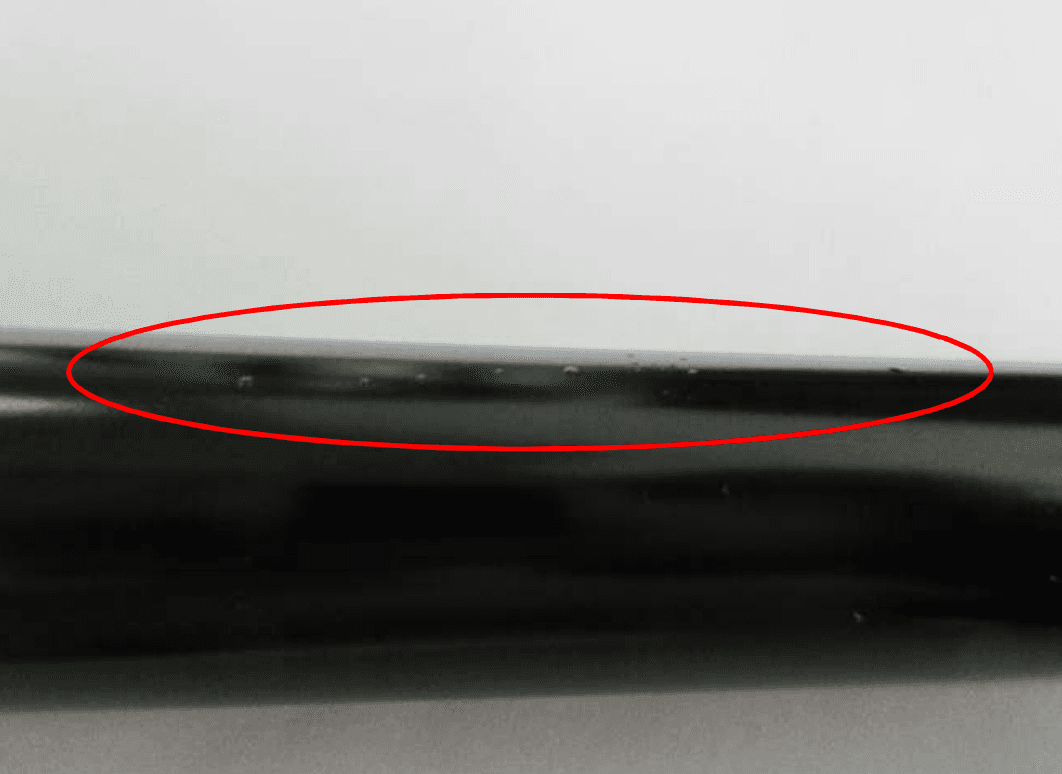
Close-up: Piston Rod Surface (96h)
Need the raw test data for your project?
We provide the original test reports and application-specific force calculations on request.
Request Full Reports