
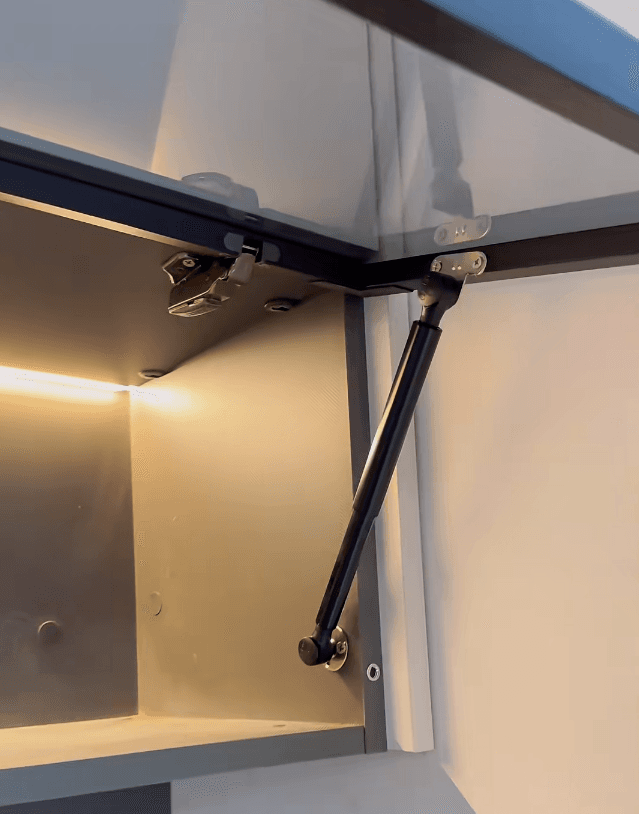
Locking Gas Spring vs Friction Stop Gas Spring: How to Choose the Right One for Safe Position Holding
Locking Gas Spring vs Friction Stop Gas Spring: How to Choose the Right One for Safe Position Holding
Meta Description: Compare locking gas springs and friction stop gas springs for safe position holding. Learn the differences in control, safety, and application fit.
Introduction
Many teams say they need a gas spring that "can stop anywhere." That sounds clear, but in product development it often creates confusion. A friction stop gas spring and a locking gas spring may both support position holding, yet they behave very differently once real force, safety requirements, and user interaction are involved.
If the wrong type is selected early, the prototype may seem acceptable in light testing but fail in real use. That is why understanding the difference is important before finalizing the design.
The Core Difference
A friction stop gas spring holds position by internal friction. It resists movement, but it does not create a true locked state. If outside force becomes large enough, the rod can still move.
A locking gas spring works through an internal control mechanism, usually opened by a release cable, lever, or button. When the release is not activated, the spring provides defined holding behavior. When the release is activated, the user can reposition the system.
In simple terms:
- Friction stop resists movement
- Locking gas spring controls and secures movement
These are not the same performance level.
When Friction Stop Makes Sense
Friction stop gas springs are often useful when the product needs simple manual adjustment and does not require strong locking confidence.
Typical fit includes:
- lightweight display supports
- compact ergonomic accessories
- covers or panels with limited external loading
- products where some movement under higher force is acceptable
The main benefit is simplicity. No separate release control is required, so integration can be easier.
However, that simplicity is also the limit. If the application involves safety risk, higher load, or user force after positioning, friction stop may not be enough.
When Locking Gas Springs Make Sense
Locking gas springs are usually the better choice when unintended movement is unacceptable. They are commonly selected for products that need:
- stronger holding confidence
- safer user interaction
- controlled release before adjustment
- better resistance to changing external force
Typical examples include adjustable furniture, support structures, or devices where the user may lean, press, or load the system after positioning. In these cases, a locking gas spring provides a clearer interaction logic: move only when commanded, hold when released.
Why the Difference Matters in Real Products
The most common mistake is assuming friction stop can replace locking. This often happens when a prototype seems stable during a light test, so the team assumes the product is safe.
But in field use, several problems can appear:
- gradual drift
- unintended downward movement
- poor user confidence
- instability under changing load
- safety concerns in user-facing products
If the structure must stay in place even when stronger force is applied, friction alone is usually not the right answer.
A Practical Selection Test
When comparing the two, ask these questions:
- Will the user press, lean on, or load the structure after adjustment?
- Is any movement acceptable after positioning?
- Would unintended motion create a safety or usability issue?
- Does the product need a release action before repositioning?
- Is there space in the design for a cable, lever, or button?
If the product can tolerate some movement and simplicity matters most, friction stop may be appropriate. If the product needs stronger security and more predictable holding behavior, locking is usually the safer choice.
Common Specification Mistake
One of the most expensive errors is writing a vague requirement such as "need gas spring with any-position stop." That does not tell the supplier whether the application needs resistance or real locking behavior.
Instead, define:
- supported load
- expected external force after positioning
- stroke requirement
- mounting geometry
- safety expectations
- whether a release mechanism can be integrated
Those details make selection faster and reduce redesign risk.
What Engineers Should Prepare
If you want a useful recommendation, send more than a product name. A supplier can give better guidance when you provide:
- application description
- load condition
- motion range
- installation concept
- user interaction method
- acceptance of movement after positioning
That information helps determine whether friction stop is sufficient or whether a locking gas spring is necessary.
Conclusion
Locking gas springs and friction stop gas springs may sound similar in early discussions, but they solve different problems. Friction stop helps resist movement with simple adjustment. Locking gas springs provide stronger control and better protection against unintended motion.
The right choice depends on load, safety, and what "hold position" really means in your product. Making that distinction early can prevent costly prototype revisions and lead to a safer, more reliable final design.
CTA
If you are unsure whether your application needs friction stop behavior or true locking performance, send us your load condition, motion requirement, and installation concept. We can help define the right gas spring type before you commit to prototype changes or tooling.