
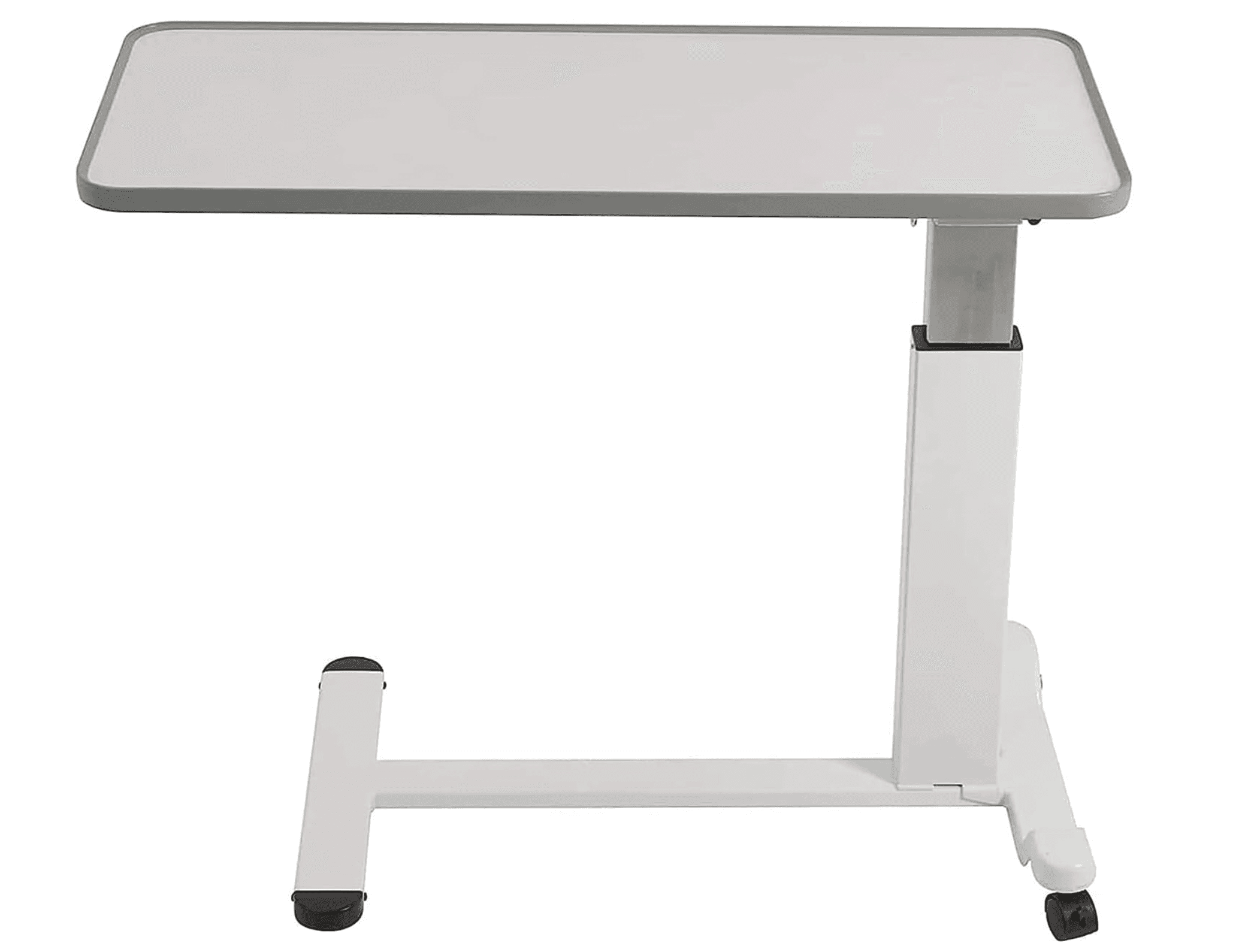
Rigid in Compression Lockable Gas Springs: Easy Lift & Stable Hold
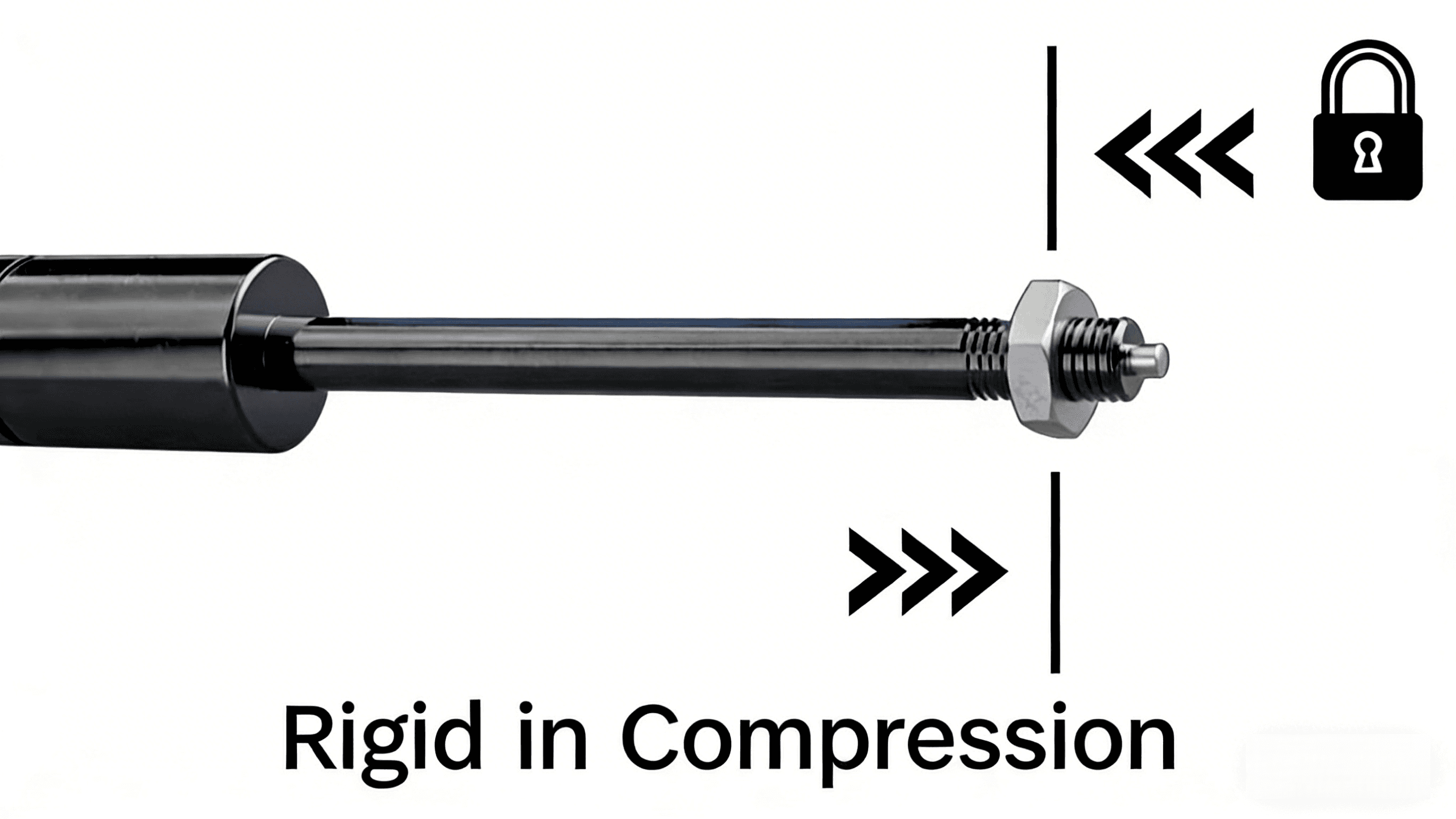
Rigid in Compression Lockable Gas Springs: Easy Lift & Stable Position Hold
For mechanical engineers and product designers, achieving the perfect balance of movement and stability is a constant challenge. For example, a "rigid in compression" lockable gas spring allows a table lid to hold firmly at any position under load, while still permitting easy, fluid movement when the table is manually lifted.
Our one-way lockable gas springs are engineered for assemblies that demand effortless manual lifting and secure holding at any height. They focus on controllable, safe movement that goes far beyond basic load support.
Working Principle
This specialized gas spring features intelligent directional control:
- Free movement when extending, allowing for simple, one-handed manual lifting.
- Rigid locking at any stroke position when compressed, ensuring no slipping or automatic bounce-back under load.
Its unidirectional design enables free motion in one direction, while the opposite direction requires trigger unlocking to reposition. If your product design demands a concealed release mechanism without external cables or levers, consider integrating our push-to-unlock gas springs for a cleaner, cable-free aesthetic.
Why Force Rating Alone Cannot Guide Selection
Real usability depends on the full mechanical system rather than a nominal force value printed on the cylinder.
The operating feel relies on the complete assembly: moving part weight, pivot placement, linkage ratio, mounting angle, and total stroke. Identical 70N gas springs can perform drastically differently across separate frames — some feel overly powerful and aggressive, while others operate smoothly.
Proper matching relies on balancing the gas spring force, mechanical geometry, and load distribution as a unified system.
Typical Design Case Challenge
Consider this case study: one of our OEM customers required a desktop that presses down lightly, lifts without strain, and locks securely at arbitrary heights. Testing identical 70N samples across different frames showed inconsistent performance. This was caused by unbalanced mechanics rather than defective gas springs.
A mismatch between the desktop weight and the spring's extension force created stiff movement in both upward and downward directions. This specific gas spring must be designed so that the weight of the tabletop perfectly balances its maximum extension force.
To resolve this, we ask the client to add physical weights gradually—starting from 1kg, then 2kg, and 3kg—until the tabletop is fully compressed. Once we have this empirical data, we accurately calculate and adjust the gas spring force based on the corresponding weight, ensuring a flawless user experience.
Key Selection Checklist from DK Gas Spring
When specifying one-way lockable gas springs for your equipment, prioritize these critical factors:
- Real assembly setup, not just theoretical drawing data.
- Total moving weight and the exact center of gravity location.
- Mount points, installation angles, and the resulting leverage ratio.
- Functional demand: precise lockable positioning or basic assist support only.
- Target operating feel: light compression vs. controlled lifting.
Poor mechanical geometry will inevitably result in stiff pressing or excessive upward thrust, even if you try alternative force variants of the exact same model.
Reliable Motion Control for Custom Designs
DK Gas Spring's one-way lockable gas springs integrate supporting and locking into a single compact component. They are ideal for designs requiring a light downstroke, gentle lifting, and stable fixed positioning (such as medical overbed tables, adjustable lecterns, or specialized industrial workstations). Browse our comprehensive catalog of lockable gas springs to find the exact stroke and force parameters suitable for your ergonomic furniture.
Successful specification does not hinge on a single force number, but on full compatibility between the gas spring and your complete mechanical structure.
💡 Ready to optimize your mechanical design? Stop relying on trial-and-error testing. Whether you are battling stiff movement or need a precise cross-reference for a failing OEM part, use our gas spring replacement solutions to get a free engineering diagnostic and a customized sample kit today.