
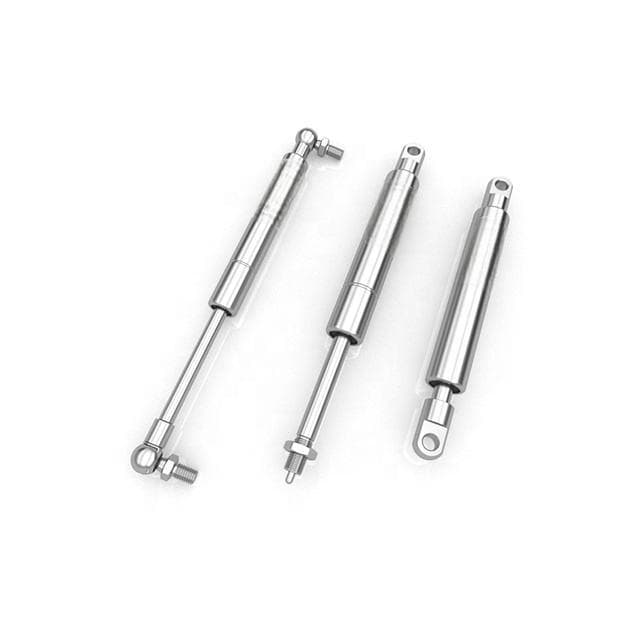
Why SS316 Stainless Steel Gas Springs Are Non-Negotiable for Marine Applications
Why SS316 Stainless Steel Gas Springs Are Non-Negotiable for Marine Applications
When it comes to the marine industry, the environment is unforgiving. Saltwater, high humidity, and extreme UV exposure can destroy standard carbon steel components in a matter of weeks. For boat builders and marine maintenance professionals, choosing the right gas spring for hatches, engine covers, and storage compartments isn’t just about performance—it’s about survival. That is why specifying heavy-duty marine gas springs engineered for saltwater environments is the first step in ensuring vessel safety.
Here is why SS316 Stainless Steel Gas Springs are the non-negotiable standard for marine applications.
The Threat of Saltwater Corrosion
Standard carbon steel gas springs, even when painted or powder-coated, are highly susceptible to rust when exposed to salty sea air. Once rust breaches the cylinder seal, the pressurized gas escapes, and the strut fails entirely.
While SS304 stainless steel offers moderate protection and is fine for indoor medical or food-grade applications, it still falls short in harsh coastal environments.
Beyond Surface Rust: The Hidden Threat of Crevice Corrosion in Marine Bilges
Many engineers believe that any stainless steel will suffice. However, in enclosed, high-humidity marine environments like engine rooms and bilges, gas springs suffer from crevice corrosion. When saltwater gets trapped in micro-gaps—such as under mounting brackets or between the cylinder and the rod seals—the area becomes starved of oxygen. This breaks down the steel’s passive chromium oxide layer.
By utilizing premium SS316 with 2-3% Molybdenum, our 316L stainless steel boat struts form a highly stable passive film that actively resists this localized, oxygen-starved chemical attack, preventing catastrophic pressure loss.
The SS316 Advantage: Built for the Ocean
SS316 (Marine Grade) Stainless Steel contains molybdenum, an alloy addition that drastically increases corrosion resistance, particularly against chlorides found in seawater.
- 1000-Hour Salt Spray Tested & Surface Passivation: At DK Gas Spring, our marine-grade components undergo continuous, accelerated salt-fog testing. Unlike standard hardware that suffers from "tea-staining" due to microscopic carbon iron contamination left over by CNC tooling, DK Gas Spring implements a rigorous chemical passivation and electropolishing process. This eliminates all surface free iron, creating a microscopically smooth mirror-finish that gives salt crystals nowhere to cling. Furthermore, our units feature integrated clean caps and specialized, internal self-lubricating seals that wipe salt residue off the rod on every stroke, ensuring zero pressure loss over thousands of cycles in offshore powerboats.
Salt Spray Test Report (NSS)
Key Test Parameters
Test Method
Neutral Salt Spray (NSS)
Standard
GB/T 10125-2012
Exposure Time
96 Hours
Temperature
35±2 °C
NaCl Concentration
50±5 g/L
Chamber Environment
- Chamber Temperature35±2 °C
- Saturator Temperature47±2 °C
- Salt Fog Collection Rate1.0 - 2.0 ml/(80cm²·h)
- pH Value of Collected Solution6.5 - 7.2
Sample Preparation
- Sample Angle15° - 25° from vertical
- Cleaning Method Before TestWiped with ethanol
- Cleaning Method After TestRinsed in gently running water (<35°C), dried
- Evaluation StandardGB/T 6461-2002
Pass / Excellent
After 96 hours of Neutral Salt Spray exposure, the tested gas spring samples showed no visible red rust on the main cylinder or piston rod. Minor blistering observed on the end fittings (non-critical area). Protection Rating: 9/10.
Engineering Note
Standard configuration delivers 96-144 Hours NSS. Custom multi-layer QPQ and premium coatings are available to support up to 244+ Hours Salt Spray for heavy-duty manufacturing, marine environments, or industrial machinery applications.
Compliance Declaration
Minor surface blistering on standard zinc-plated non-working end-fittings is within acceptable engineering limits for this configuration and does not affect the pressure containment or mechanical integrity of the cylinder.
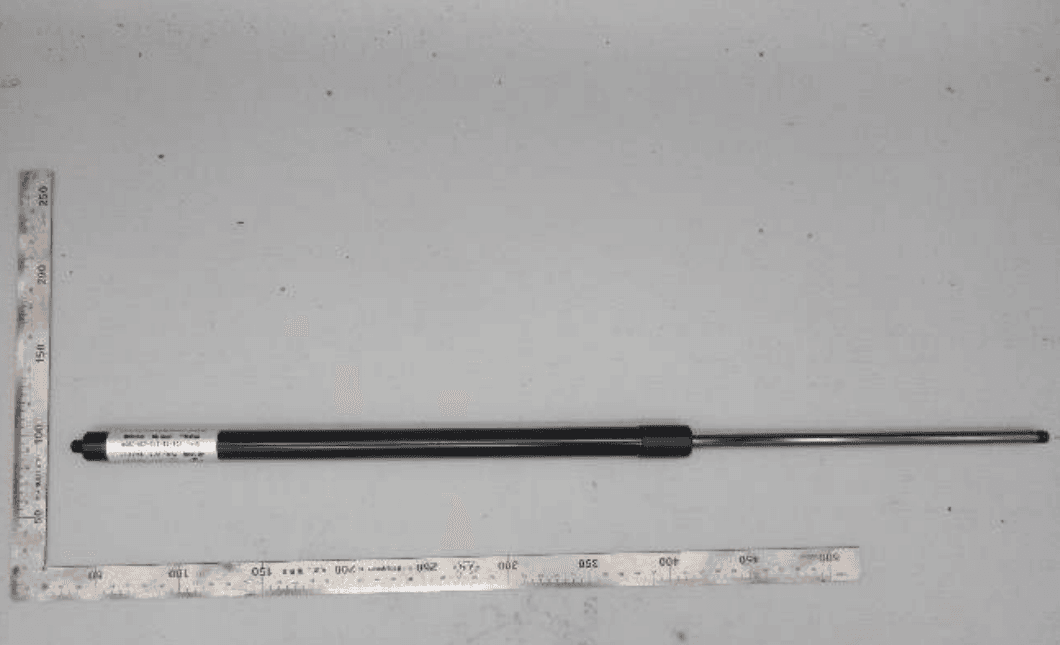
Sample Before Test (0h)
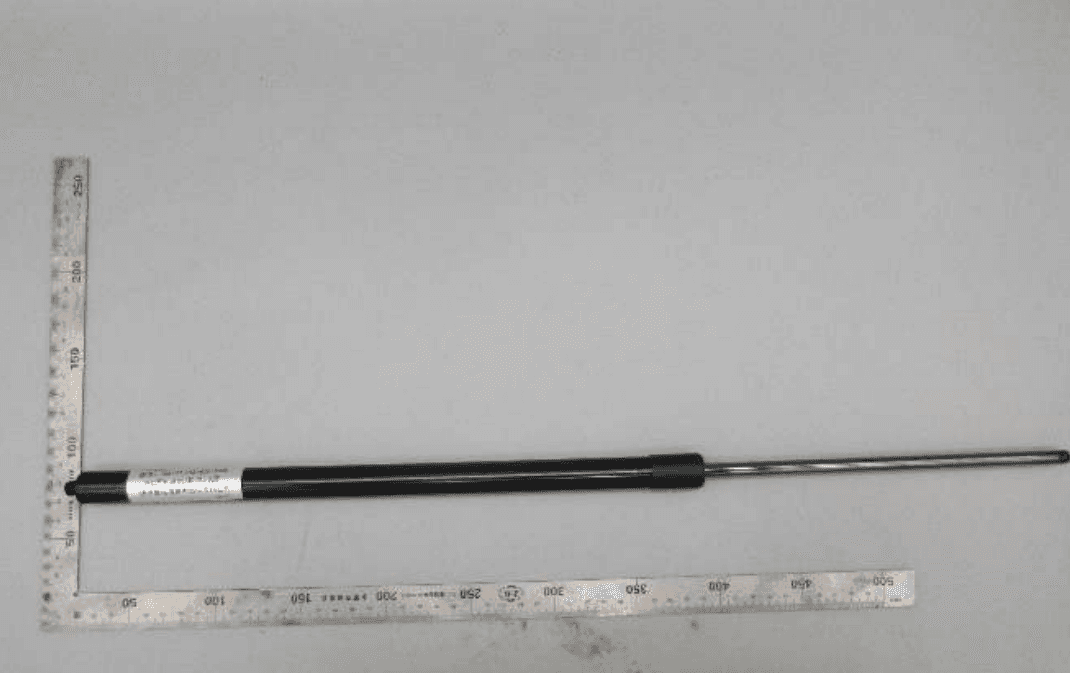
Sample After Test (96h)
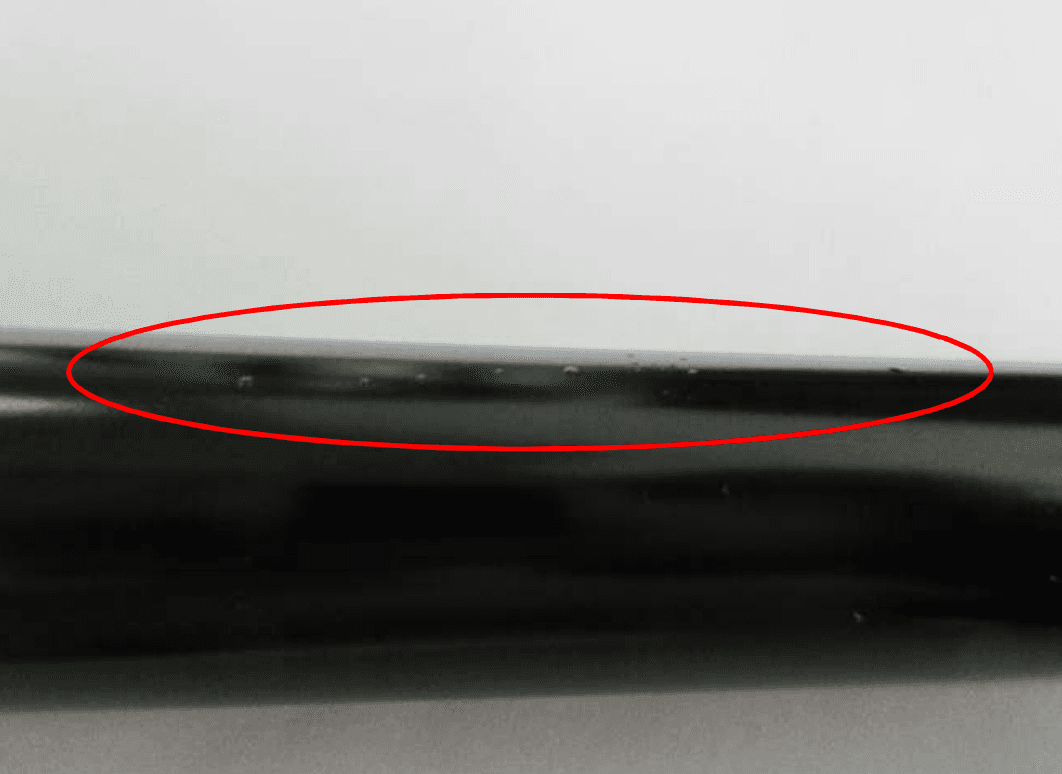
Close-up: Piston Rod Surface (96h)
- Aesthetic Longevity: Boat owners expect premium finishes. SS316 maintains its sleek, polished appearance, adding value to luxury yachts and recreational vessels.
Optimizing the Cost-to-Performance Ratio for Fleet Builders
For commercial fishing boat fleets or semi-exposed compartments where budget optimization is required, specifying 100% full SS316 can sometimes over-engineer the project. To bridge this gap, DK engineered a Hybrid Marine Solution: a corrosion-resistant SS316 cylinder paired with a highly treated carbon steel rod. This provides excellent atmospheric protection at a significantly optimized price point.
If you are unsure whether your project requires full 316L stainless steel or our hybrid alternative, review our comparison guidelines on the DK Marine Gas Spring Solutions platform or request a technical discussion with our engineers.
Matching the Right Strut to Your Vessel's Hardware
Not all marine hatches require the same heavy-duty force. To avoid damaging fiberglass decks or bending hinges, specifications must match the application:
- Luxury Yacht Hatches & Livewells: Typically require compact designs with smooth, dampening motion and forces ranging from 50N to 2000N.
- Heavy-Duty Engine Covers & Access Panels: Demand robust lifting assistance capable of sustaining high-force loads up to 3000N, fitted with temperature-resistant, self-lubricating seals.
For full dimensional charts, stroke choices, and customized force configurations, you can explore our dedicated Yacht Hatch Gas Springs breakdown.
⚠️ TECHNICAL WARNING: Never Mix Disalloys on Marine Hardware
A 316L stainless steel marine gas strut is only as durable as its weakest link. A catastrophic mistake many fleet buyers make is pairing a premium SS316 cylinder with standard carbon steel or Grade 304 end fittings (ball-and-socket, clevis) or mounting brackets. Saltwater acts as an aggressive electrolyte, triggering Galvanic Corrosion that rapidly eats away the less-noble metal. To safeguard your vessel, DK Gas Spring mandates matching SS316 end fittings and reinforced mounting brackets to preserve total system integrity.
The Perfect OEM Alternative
Historically, the US marine market has relied heavily on domestic brands like ASRaymond. However, DK Gas Spring offers exact drop-in replacements made from premium SS316, providing the same high-end marine performance at a highly competitive price point. Explore our full catalog of stainless steel marine gas struts built to ISO 9001 standards.
SGS RoHS Test Report
Substance Analysis Results
| Substance | Limit | MDL | Result | Status |
|---|---|---|---|---|
| Cadmium (Cd) | 100 mg/kg | 2 mg/kg | ND | Passed |
| Lead (Pb) | 1000 mg/kg | 2 mg/kg | 17 mg/kg | Passed |
| Mercury (Hg) | 1000 mg/kg | 2 mg/kg | ND | Passed |
| Hexavalent Chromium (Cr(VI)) | 1000 mg/kg | 8 mg/kg | ND | Passed |
| Sum of PBBs | 1000 mg/kg | 5 mg/kg | ND | Passed |
| Sum of PBDEs | 1000 mg/kg | 5 mg/kg | ND | Passed |
* ND = Not Detected (lower than MDL). MDL = Method Detection Limit.
Tested Sample
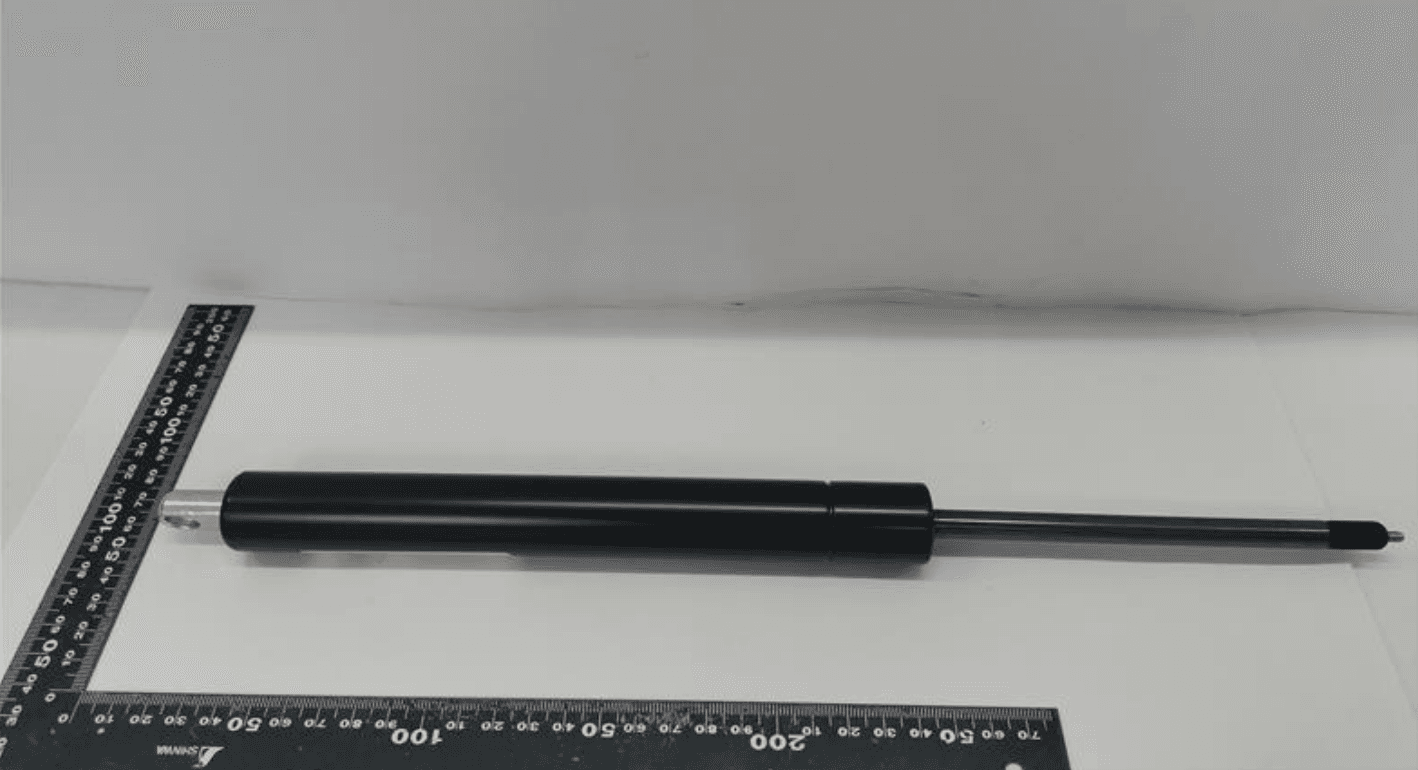
Official Test Sample ID: SHA21-033925.001
Reference Standards
- •IEC 62321-5:2013
- •IEC 62321-7-2:2017
- •IEC 62321-4:2013+AMD1:2017
- •IEC 62321-6:2015
Analytical Instruments
- •ICP-OES (Inductively Coupled Plasma Optical Emission Spectrometry)
- •AAS (Atomic Absorption Spectrometry)
- •UV-Vis (Ultraviolet-Visible Spectroscopy)
- •GC-MS (Gas Chromatography-Mass Spectrometry)
- Whether you are designing a luxury yacht hatch or a heavy commercial fishing vessel door, choosing the right specifications is crucial. View our standard parameters on the DK Marine Gas Spring Solutions page, or Contact Our Engineering Team Today for a Free Sample.
FAQ: Why does my SS316 marine gas spring show a weak magnetic attraction?
In its raw, fully annealed state, AISI 316L is non-magnetic. However, heavy-duty fabrication processes such as cold-drawing the cylinder and rolling the threads alter the microstructure, inducing a slight magnetic response. This is a normal metallurgical characteristic of high-tensile, cold-worked marine hardware and does not compromise its premium corrosion resistance.