
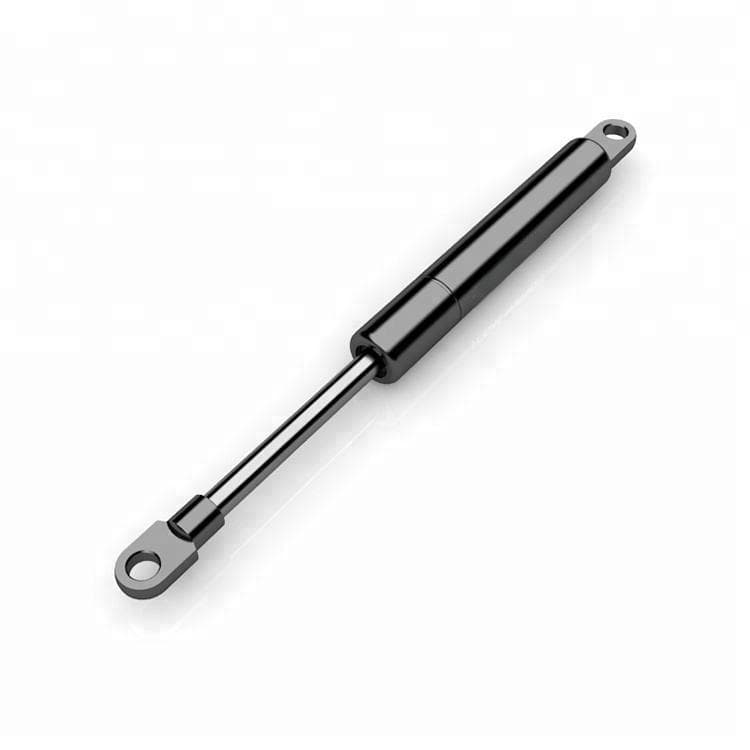
Dynamic Gas Springs in Furniture and Medical Technology: Comfort, Safety & Compliance
Dynamic Gas Springs in Furniture and Medical Technology: Comfort, Safety & Compliance
Dynamic gas springs with bypass technology have evolved from a niche product to a standard solution in two demanding industries: furniture manufacturing and medical technology. While our earlier articles covered the Dynamic Gas Spring Basics and the Dynamic vs. Hydraulic Damping in Gas Springs, design engineers and procurement professionals now face the critical question: How do I apply dynamic damping in my specific industry — and which quality and certification requirements must I address during procurement?
This article demonstrates, through real-world scenarios from both sectors, how dynamic gas springs deliver silent comfort, hygienic safety, and verifiable compliance to your products.
1. Why Dynamic Gas Springs Are Gaining Rapid Adoption in Furniture and Medical Industries
Two macro trends are accelerating the shift toward dynamic gas springs across furniture and medical equipment sectors.
Furniture industry: Ultra-slim, flat-pack designs force gas springs into horizontal mounting positions where conventional hydraulic damping fails entirely — oil pools at the cylinder base, leaving damping unpredictable or absent. Meanwhile, consumer expectations for silent, soft-close operation have cascaded from premium to mid-market, making noise-free damping a competitive baseline.
Medical technology: Aging populations drive surging demand for nursing beds and rehabilitation devices. Hospital-acquired infection (HAI) control mandates stainless steel components and disinfectant-resistant surfaces — specifications that conventional carbon steel gas springs with NBR seals cannot satisfy.
This article addresses both industries through application cases (Sections 2–3), a compliance framework (Section 4), and a structured procurement guide (Section 5).
2. Furniture Industry Applications: Damping Optimization for Fold-Down Beds, Cabinet Doors & Wall Beds
2.1 Fold-Down Beds — Comfort Damping for Horizontal Installation
In fold-down beds with horizontally installed gas springs, dynamic bypass damping enables silent, controlled closing across the entire pivot range — regardless of piston rod orientation.
Modern fold-down beds minimize installation depth, forcing the gas spring horizontal. In hydraulic designs, oil distributes unevenly — the bed frame slams into its housing. The bypass groove reverses this: gas flows in controlled fashion past the piston throughout the full stroke, producing progressive deceleration that culminates in silent closure. Uniform deceleration reduces peak hinge loads by approximately 30–50%, extending mechanism life and reducing warranty costs — based on in-house test stand measurements with simulated fold-down bed cycles.
For designs requiring intermediate-position hold-open, lockable gas springs provide multi-position locking. Once your mounting geometry is defined, consult our Horizontal Mounting: Sizing & Calculation Guide.
2.2 Cabinet Doors & Wall Beds — Soft Close and Noise Reduction
For high-end cabinet flaps and wall beds, the dynamic gas spring delivers a stepless damping curve enabling gentle, silent closing — with speed precisely tunable to flap weight via the bypass groove geometry.
Premium cabinet doors demand impact-free, finger-safe operation. Wall beds face an additional challenge: the mechanism must support the bed frame plus mattress (up to 50–70 kg) under frequent daily cycling. The graduated groove profile — with depth and width tapering along the cylinder — can be matched to specific weights, delivering a bespoke damping curve per product variant. For wall beds in the stowed position, lockable gas springs provide reliable retention.
Lockable Gas Springs — Product range for multi-position locking solutions.
Fig. 1: Dynamic gas springs in furniture applications — horizontal and inclined mounting positions with silent damping.
3. Medical Technology Applications: Safety Damping for Examination Beds, Nursing Beds & Rehabilitation Equipment
3.1 Examination Beds & Nursing Beds — Hygiene and Patient Comfort
In examination beds and nursing beds, the dynamic gas spring ensures stepless, jerk-free backrest adjustment — combined with stainless steel components (AISI 304/316) and FKM seals that withstand frequent disinfectant exposure without compromising damping performance.
Medical environments impose three requirements that conventional gas springs cannot meet simultaneously:
- Hygiene: Multiple daily disinfectant wipe-downs corrode standard carbon steel. Stainless steel AISI 304 or AISI 316 is mandatory — per SGS salt spray test 500 h+ in accordance with DIN EN ISO 9227 NSS (test report no. available from manufacturer).
- Patient comfort: Backrest adjustment must be smooth and silent. The abrupt "kick" of hydraulic end-position damping is unacceptable clinically.
- Safety: When a patient leans against the backrest during adjustment, the gas spring must not lose force or generate impact.
Dynamic gas springs address all three: full-stroke uniform damping eliminates acceleration spikes; optional FKM (Viton) seals provide enhanced chemical resistance under disinfectant exposure (including chlorine-based agents); and optional AISI 304/316 stainless steel passes SGS salt spray testing at 500 h+ without functional failure. For lightweight applications (board/mattress ≤ 15 kg), F1 tolerances narrow to −0/+25 N for consistent adjustment force.
Stainless Steel Gas Springs for maritime and hygienic environments — View our stainless steel product line.
3.2 Rehabilitation Equipment & Assistive Devices — Dynamic Safety Damping
In rehabilitation technology — from wheelchair seat adjustments to therapy couches — the continuous damping curve prevents sudden, uncontrolled movements that pose a safety risk for patients with limited muscle control.
Rehabilitation device users may lack the muscle control to stabilize themselves if a gas spring suddenly accelerates or loses force. The progressive damping curve ensures that even if the patient releases mid-motion, the backrest neither springs up nor drops. Combined with lockable gas springs for multi-position wheelchair backrest and leg-rest locking, patients gain independent adjustability.
Rehabilitation devices demand high cycle life — multiple adjustments daily over years of use. Specify a minimum of 50,000 cycles with less than 5% force loss (per GB/T 25751-2010 full-stroke compression testing). As a manufacturing capability reference: our robot application series achieves 100,000 cycles using FKM seals.
Fig. 2: Stainless steel gas springs in medical applications — hygienic design with FKM seals for disinfectant resistance.
4. Compliance & Acceptance: Quality Standards for Furniture and Medical Industries
Regardless of industry, technical procurement should require at least four verification criteria when sourcing gas springs: documented cycle life (≥ 30,000 cycles without leakage per GB/T 25751-2010), F1 force tolerances, corrosion resistance (≥ 500 h salt spray per DIN EN ISO 9227 NSS for medical stainless steel versions), and availability of CAD data.
Acceptance requirements differ substantially between industries:
| Acceptance Dimension | Furniture (Standard Grade) | Medical (Enhanced Grade) |
|---|---|---|
| Cycle Life | ≥ 30,000 cycles, no leakage | ≥ 50,000 cycles (accounts for seal stress from frequent disinfection) |
| Force Tolerance (F1) | −25 N / +50 N (standard) | −0 N / +25 N (precision, patient comfort) |
| Corrosion Resistance | Carbon steel + coating (dry indoor) | AISI 304/316 + SGS salt spray ≥ 500 h (DIN EN ISO 9227 NSS) |
| Seal Material | NBR (standard) | FKM (Viton) — disinfectant and steam resistant |
| Quality Standard | GB/T 25751-2010 | GB/T 25751-2010 + ISO 13485 (medical device QMS) |
| Temperature Range | −30 °C to +80 °C | −30 °C to +80 °C (FKM extends high-temp tolerance) |
Cycle life data is based on in-house test stand measurements with full-stroke compression in accordance with GB/T 25751-2010. Gas springs are developed in alignment with TÜV testing principles; manufacturing operates under an ISO 9001-certified QMS. The manufacturer also holds IATF 16949 — the automotive industry process control standard — signaling batch-to-batch consistency and traceability capabilities that benefit customers across all sectors.
Gas Spring Force Calculator — Verify your force requirements with our online tool.
5. Selection & Procurement Guide: Finding the Right Configuration for Your Industry
Determine the right gas spring for your application in three steps: 1) Analyze the mounting situation (horizontal/vertical/inclined), 2) Define the force grade and damping profile, 3) Specify material and seal requirements per your industry standard.
Step 1 — Mounting & Installation Space: Defines tube/rod series. Reference: 8/18 (50–400 N) for light flaps and medical; 10/22 (200–800 N) for cabinet flaps and fold-down beds; 10/28 (400–1,200 N) for machine hoods; 14/28 (800–2,000 N) for heavy industrial covers.
Step 2 — Force Grade & Damping Profile: Defines F1 force (verify with the force calculator) and damping curve — standard or custom groove geometry.
Step 3 — Material & Seals: Furniture: cost-effective 10/22 mm with NBR seals. Medical: 8/18 or 10/22 mm + stainless steel (AISI 304/316) + FKM seals — mandatory.
For series production, narrow tolerance bands are achievable: a 700 N baseline can be delivered at 700–750 N (fine) or 700–725 N (narrow), based on in-house test stand measurements at 20 °C and 400 mm/min test speed.
Designing furniture or medical devices with high comfort and safety demands?
Our application engineers help you select the optimal gas spring configuration — tailored to your industry, mounting situation, and certification requirements. Including CAD data, force calculation, and tolerance documentation.