
Gas Lift Bed Struts Not Working? 3-Step DIY Diagnosis & Replacement Guide – Avoid Force Mismatch, Thick Mattress Clearance, and Other Pitfalls
Meta Description: Gas lift bed struts not lifting or slamming shut? Learn to diagnose, measure force with formula, and avoid common pitfalls like force mismatch and thick mattress clearance issues. Includes a weight chart and safe replacement guide. Save money with this DIY tutorial.
Introduction
Did your storage bed lid just slam shut in the middle of the night? That loud bang is a safety hazard. Before you replace the entire bed, know that the culprit is almost certainly a pair of worn-out gas lift bed struts. When these furniture gas springs lose their internal nitrogen charge, the lid becomes impossibly heavy or won’t stay up. Replacing them costs very little and brings back that smooth, controlled lift. This step-by-step guide covers everything from diagnosis to safe installation.
Quick Diagnosis: Which Symptom Does Your Gas Lift Bed Strut Have?
Identify the issue fast. If the hinges aren’t bent and the bed base isn't jammed, the problem lies squarely with the gas struts.
- The lid is extremely heavy to lift or won’t go up → Force decay, internal nitrogen pressure is too low.
- The lid drifts down slowly after lifting → Seal failure, nitrogen is leaking out.
- The lid won’t stay up and you hear a hissing or grinding noise → The strut is dead, or the ball joint fitting has come loose.
Summary: Use the symptoms to pinpoint the fault; don’t blame the bed frame.
Step 1: Safety Diagnosis – Confirm Your Gas Lift Bed Strut Has Failed
Ask someone to hold the bed lid securely. Remove one strut and try to compress it by hand.
Expert Tip: A healthy gas lift strut is nearly impossible to compress by hand. If you can push it in easily, the internal seal has failed, the nitrogen charge is gone, and the strut is dead.
Inspect the strut body. Do you see any oil residue? That's hydraulic damping oil leaking past a damaged piston seal, often accompanied by rust or a loose ball joint. If you spot these signs, replace the struts immediately.
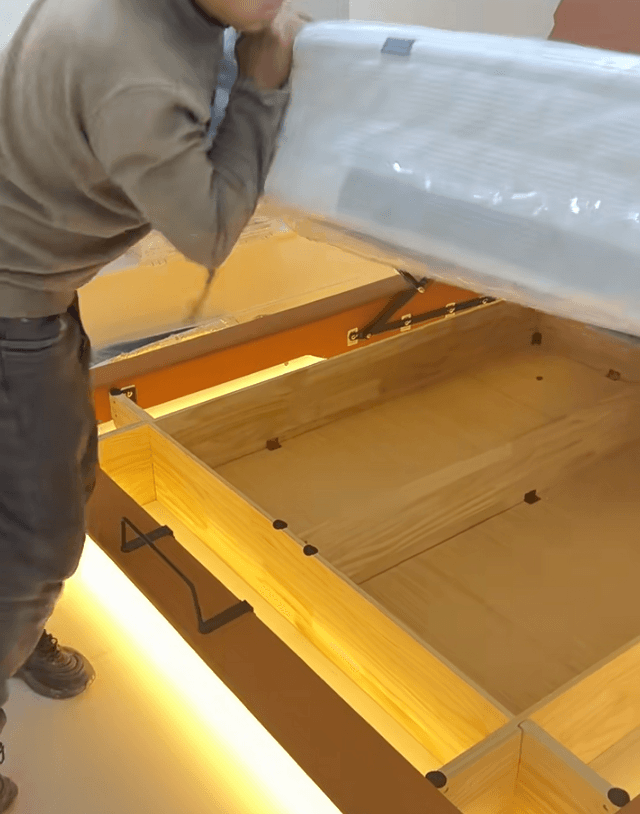
Summary: If you can compress it by hand or see oil, it must be replaced.
Step 2: Accurate Measurement & Selection – Key Parameters and 3 Pitfalls
To buy the right replacement, you must measure mounting distance, stroke, and force. Avoid the three common mistakes below.
The Three Key Measurements: Mounting Distance, Stroke, and Force
Measure the center-to-center distance of the ball joints when the strut is fully extended and fully compressed; the difference is the stroke. Force (in Newtons) is usually stamped on the old strut body (e.g., “400N”, “600N”). If you can't find it, use this formula:
Gas Spring Thrust ≈ (Bed Base Weight + Mattress Weight + Stored Items Weight) × 60%-70%
| Mattress Type | Approximate Weight |
|---|---|
| Latex (≤15cm) | 20-35kg |
| Coir (coconut fiber) | 25-40kg |
| Pocket Spring (≥20cm) | 30-50kg |
| Bed Size / Configuration | Recommended Force Per Strut |
|---|---|
| 1.5m bed (standard mattress) | 400N-600N |
| 1.8m bed (heavy frame or thick mattress) | 600N-800N |
| High-profile storage bed (mattress >15cm) | Increase to next force level |
Note: Common ball diameters are 10mm and 13mm; always verify with calipers.
Pitfall 1: Ignoring Stroke Length
If you only match the compressed length, the lid may not open fully or the strut won't fit. You must confirm the extended and compressed length difference, keeping it within ±10mm of the original.
Pitfall 2: Chasing Excessive Force
A strut that’s too powerful makes the lid hard to close and can strain the bed frame. Unless you’ve added a significantly heavier mattress, stick to the original force rating. Don't believe “more force is better.”
Pitfall 3: Overlooking Ball Joint Specs
Ball diameters come in 10mm and 13mm, and the joint angle can be straight or angled. Buying the wrong one means it won't fit. Match the old part in hand when ordering.
Real-World Mistake: Many users of high-profile storage beds fit a 20cm+ thick mattress, only to find it jams against the headboard when opening, causing noise and resistance. If you have a high-profile bed, keep the mattress under 15cm thick to maintain safe clearance.
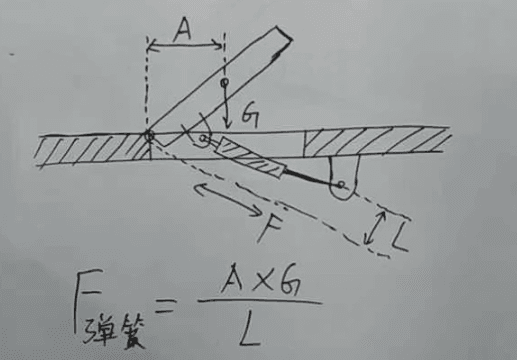
Summary: Match dimensions, force, and connectors precisely; thick-mattress users must check clearance.
Step 3: DIY Replacement & Testing – Safety First, Work in Pairs
Follow these steps carefully and never work alone.
Replacement Steps
- Secure the Lid – A helper must hold the bed lid firmly. Never work alone.
- Remove the Old Strut – Use a flathead screwdriver to gently pry back the retaining clip on the ball joint. It will pop off with a click.
- Install the New Strut – Attach the strut to the bed frame first, then line up the lid bracket and press until you hear a sharp click as the clip locks. Apply a dab of grease to the ball joints before fitting to prevent future squeaks.
⚠️ Safety Warning: Always replace both gas lift bed struts simultaneously! Mixing old and new creates uneven force distribution, ruining the new strut. It’s a good idea to install one new strut first to test the feel, then proceed with the second to avoid rework.
Post-Installation Test
Cycle the lid slowly 2-3 times. It should hold steady at any angle, operate silently, and close smoothly. If one side lifts unevenly, the mounting positions are misaligned and need recalibration.
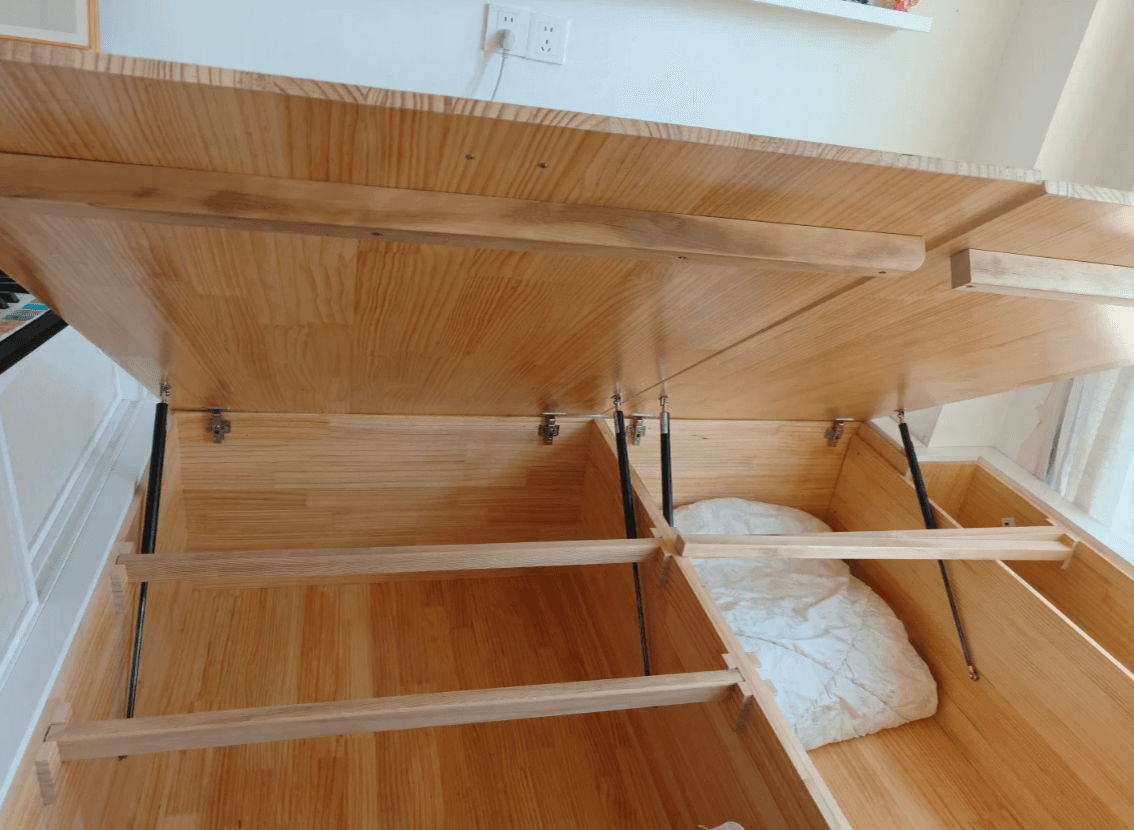
Summary: Two-person job, replace both struts together, test thoroughly before regular use.
Conclusion
Following these three steps—diagnose, measure, replace—you can restore your storage bed’s smooth and safe operation for very little cost. Beyond saving money, you’ll gain the satisfaction of a solid DIY fix. Opt for gas lift bed struts with BIFMA or TÜV certification; their typical lifespan is 5-8 years. Inspect the struts every six months to protect your family from unexpected slams.