

Hydraulic Dampers 101: Controlling Motion Safely
Hydraulic Dampers 101: Controlling Motion Safely
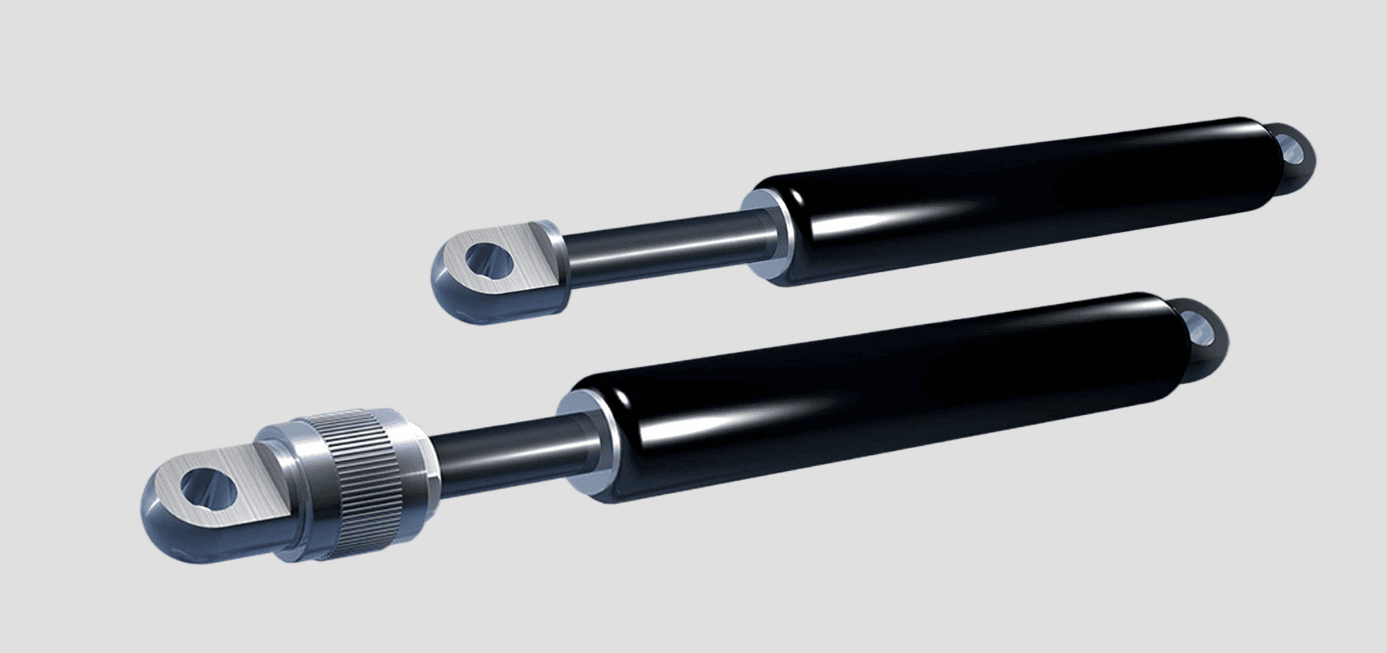
Have you ever slammed a cabinet door only to have it catch itself and close silently? Or watched a heavy machine lid glide down smoothly instead of crashing? That magic is thanks to a Hydraulic Damper.
While gas springs provide force (lifting/pushing), hydraulic dampers provide resistance (braking/slowing). In this post, we'll explain how they work and why they are essential for safety and product longevity.
What is a Hydraulic Damper?
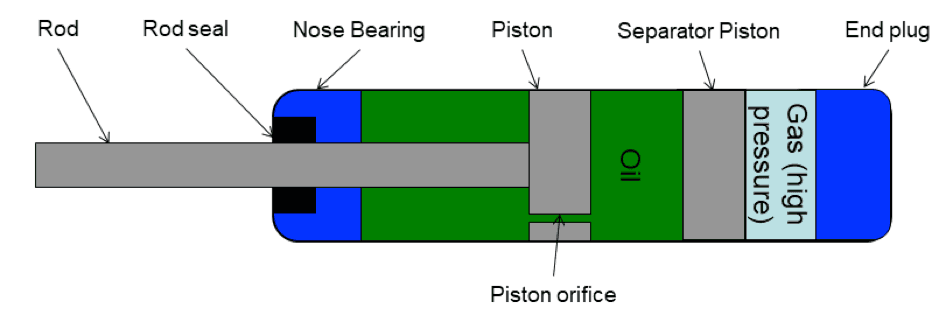
A hydraulic damper is a device that uses the viscosity of oil to resist motion. Unlike a gas spring, it contains no pressurized gas (or very little).
- Internal Mechanism: Inside the cylinder, a piston moves through oil. The piston has small holes (orifices) that allow the oil to pass through.
- Creating Resistance: As you try to move the piston faster, the oil struggles to squeeze through the small holes, creating resistance. This resistance is proportional to speed: the faster you move, the harder it resists.
Types of Hydraulic Dampers
1. Extension Dampers (Pull Damping)
- Function: Provides resistance when the rod is being pulled out. It moves freely when pushed in.
- Application: Controlling the speed of a drawer opening,a lid that falls open or tailgate soft opening.
2. Compression Dampers (Push Damping)
- Function: Provides resistance when the rod is being pushed in. It moves freely when pulled out.
- Application: preventing a heavy lid from slamming shut (soft-close), shock absorbers on machines.
3. Dual-Way Dampers (Both Directions)
- Function: Provides resistance in both directions.
- Application: Stabilizing solar panels against wind, controlling swinging doors.
Why Use a Damper instead of a Gas Spring?
It's common to confuse the two. Here’s when you need a Damper:
- You don't need lift assistance: The object is light enough or moves by gravity/motor, but you need to control its speed.
- Safety is a priority: A heavy lid falling freely can crush fingers. A damper ensures it falls at a safe, controlled speed.
- Protecting Components: Sudden stops and impacts can damage hinges, latches, and sensitive electronics. Dampers absorb this energy.
Real-World Example: The "Soft Close" Effect
Imagine a heavy toolbox lid.
- Without Damper: You let go, and gravity pulls it down. It accelerates and slams shut with a loud BANG, potentially injuring fingers.
- With Compression Damper: You let go. Gravity pulls it down. The damper engages, forcing oil through tiny holes. The lid descends slowly and silently, closing with a gentle click.
Customizing Your Damper
At DK Gas Spring, we can customize the damping characteristics to match your exact needs:
- Damping Force: Light resistance for small doors vs. heavy resistance for industrial hatches.
- Stroke Length: How far it needs to travel.
- End Fittings: Eyelets, ball joints, or custom threads.
Don't let your products slam and bang. Add a touch of luxury and safety with our precision hydraulic dampers.
Next Week: Get your calculators ready! We’ll teach you the formula to calculate the exact force needed for your gas spring project.