

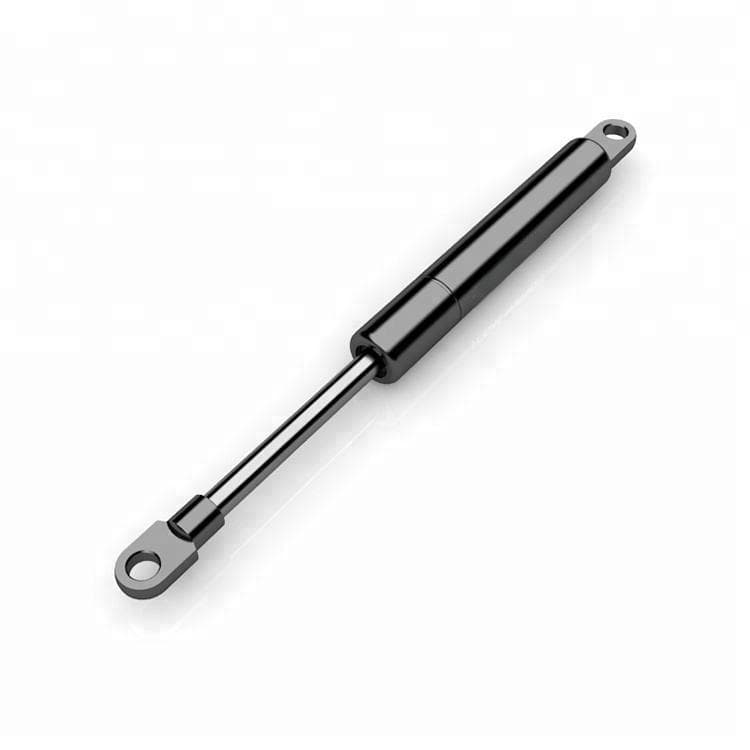
Compression vs. Traction Gas Springs: What’s the Difference?
Compression vs. Traction Gas Springs: What’s the Difference?
When engineers or designers talk about "gas springs," they are usually referring to the standard Compression Gas Spring. However, there is another type that works in the exact opposite way: the Traction Gas Spring (also known as a Pull-Type Gas Spring).
Choosing the wrong type can lead to a mechanism that fails to work or even causes injury. In this post, we’ll clarify the differences, explain how each works, and help you decide which one you need for your project.
1. Compression Gas Springs (The "Push" Type)
This is the most common type of gas spring found in 90% of applications, such as car hoods, kitchen cabinets, and machine covers.
- How it works: In its resting (free) state, the piston rod is fully extended. When you push the rod in, the internal nitrogen gas is compressed, creating a force that wants to push the rod back out.
- Function: It provides lift assistance. It helps you open a heavy lid and holds it open.
- Typical Application:
- Opening a car trunk.
- Lifting a bed frame (storage bed).
- Supporting an industrial hatch.
Key Characteristic: You have to apply force to compress it; it extends on its own.
2. Traction Gas Springs (The "Pull" Type)
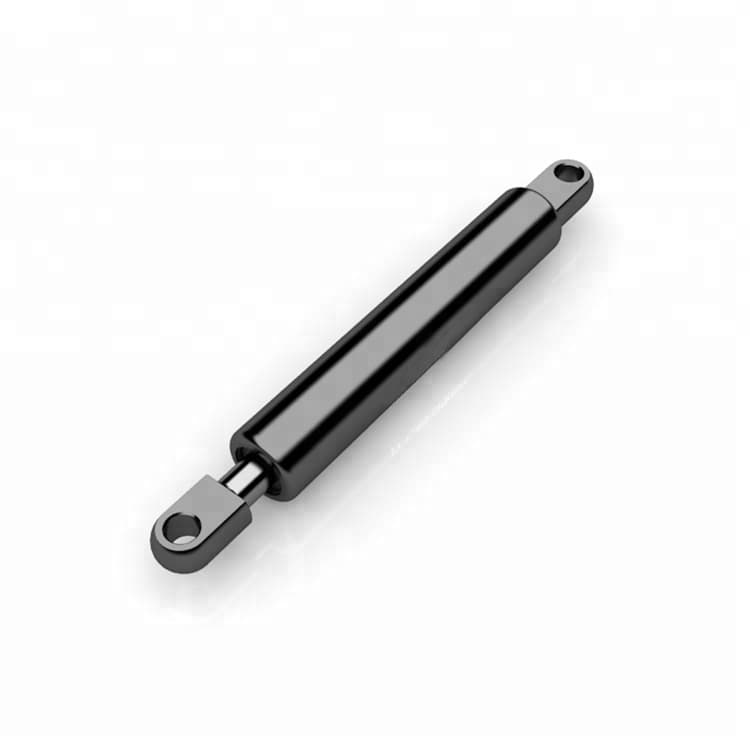
Traction gas springs are less common but essential for specific scenarios where you need the object to be pulled closed or held in a retracted position.
- How it works: In its resting (free) state, the piston rod is fully retracted (inside the cylinder). The internal pressure tries to keep the rod inside. To use it, you must pull the rod out. When you release it, the spring force pulls the rod back in.
- Function: It provides closing assistance or tension. It keeps a lid closed or helps pull a heavy ramp up.
- Typical Application:
- Garage doors (helping to pull them up/close).
- Closing heavy hatches that need to seal tightly.
- Tensioning conveyor belts.
Key Characteristic: You have to apply force to extend it; it retracts on its own.
Comparison Table
| Feature | Compression Gas Spring | Traction Gas Spring |
|---|---|---|
| Free State | Rod is Extended | Rod is Retracted |
| Force Direction | Pushes Out (Extension) | Pulls In (Retraction) |
| Main Use | Lifting / Opening | Closing / Tensioning |
| Symbol | Often marked with an arrow pointing OUT | Often marked with an arrow pointing IN |
| Cost | Standard, Lower Cost | Specialized, Higher Cost |
Which One Do You Need?
**Scenario A: You have a heavy lid that you want to lift up.**lift up.jpg
You need a Compression Gas Spring. The spring will help counteract gravity as you lift the lid. Scenario B: You have a ramp or door that falls open, and you want it to self-close or be easier to pull shut. You likely need a Traction Gas Spring. The spring will fight against gravity to pull the object back to its closed position.
Summary
- Compression = PUSH force (Rod extends naturally).
- Traction = PULL force (Rod retracts naturally).
At DK Gas Spring, we manufacture both types in a wide range of sizes and forces. If you are unsure which one fits your design, send us your drawing or description, and our engineers will guide you to the perfect solution.